The Blank Ballot Line
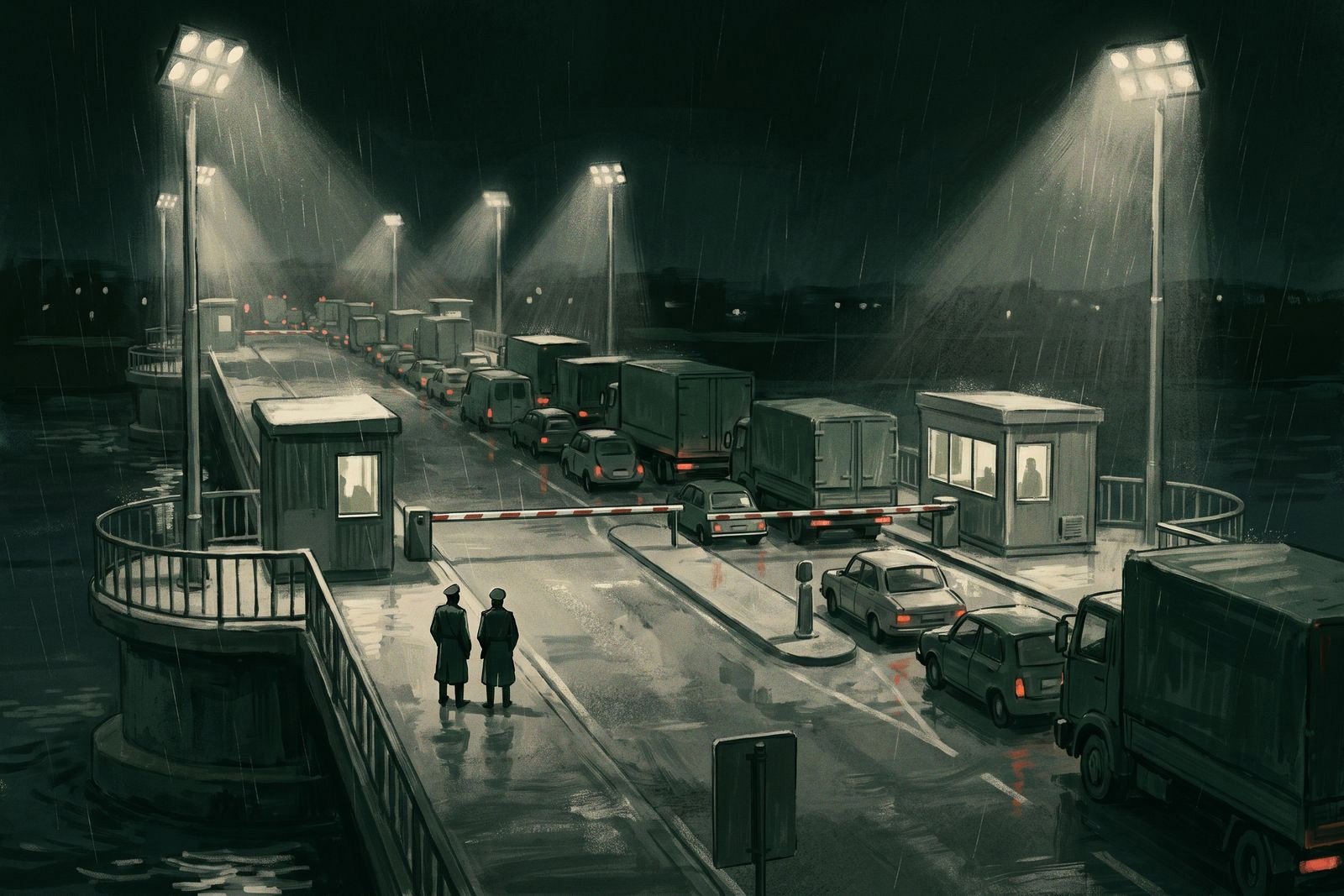
In the Creuse, in March 2002, the mayor of a commune of three hundred and forty signs a sponsorship form for Charles Pasqua because a man from Paris has telephoned him twice about whom he must not sign for, and he does not care to be telephoned twice. Multiply the irritation across a few dozen mairies of the moderate right and Pasqua clears his five hundred, out of thirty-one departments. Bruno Mégret, hunting the same names against him, does not, and the MNR's bloc comes home to a Front national candidate whose own quest stops being desperate around the eighteenth of the month. The same few dozen forms could as easily have deleted Jean-Pierre Chevènement or Christiane Taubira and given France a rerun of 1995. They went the other way. On 4 April the Conseil constitutionnel draws seventeen names by lot.
2002The Least-Elected President
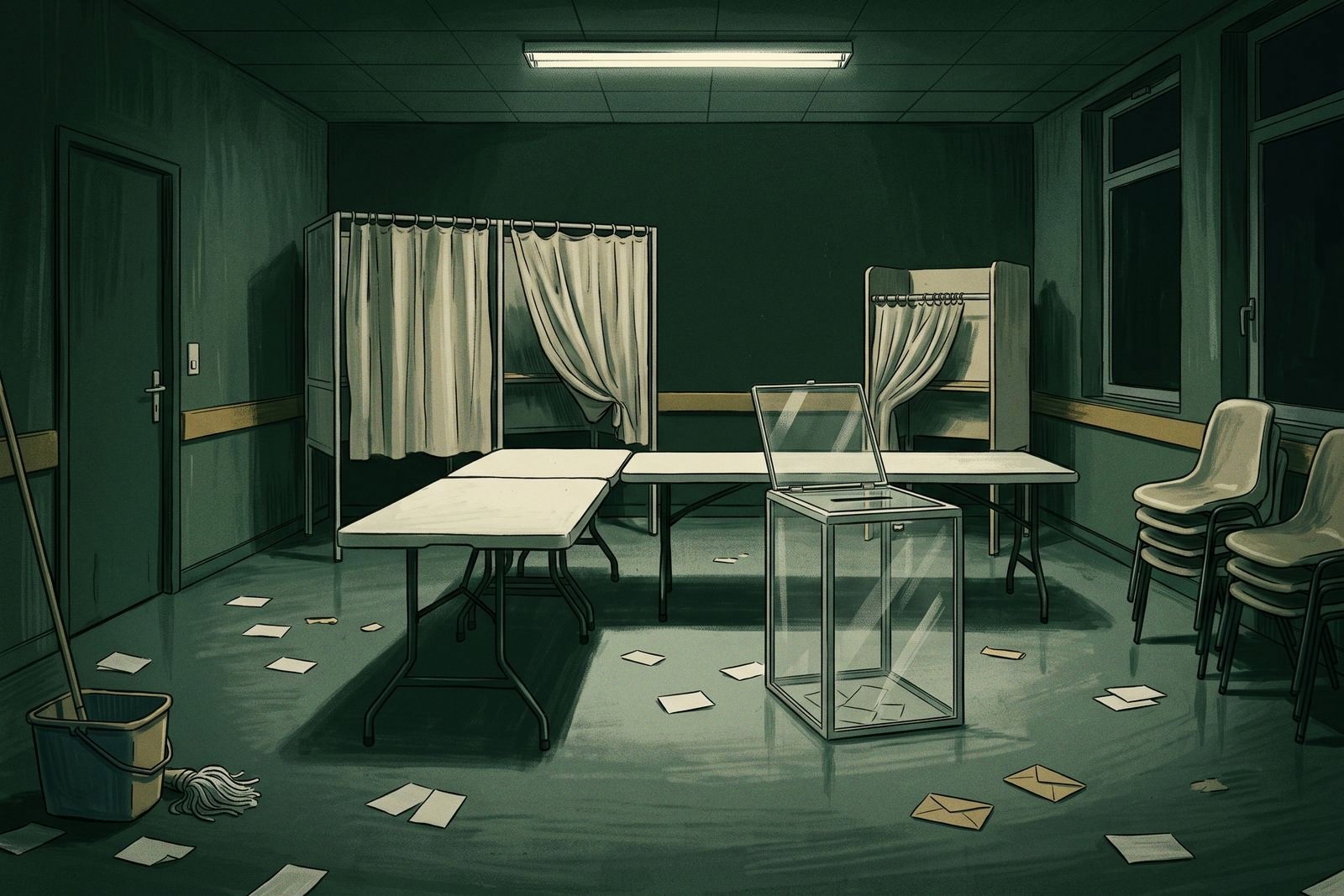
In the état civil office of the mairie of Bourges, Mireille, forty-four, has counted ballots at the same table since 1988. At a quarter past eight on Sunday 21 April her bureau has Le Pen first and Chirac fourth, and she assumes she has misheard the national figure. She has not. On abstention of 28.6 %, the table reads Le Pen 19.1, Jospin 16.4, Chirac 15.4, Bayrou 8.0, Pasqua 6.8.
Chirac falls to third on three forces, not one. Pasqua raids his own camp on Maastricht and on the affaires already in the public record, the Paris emplois fictifs and HLM files, the Méry tape of 2000. The retired and rural voters soured by the immunity controversy of 1999–2001 stay home. A point of soft centre leaks to Bayrou. Over it all sits the crime campaign both candidates of the right had been running, and the face of Paul Voise, a pensioner of seventy-two beaten in Orléans on 18 April and burned out of his house, on every bulletin for three nights.
Then the fortnight. Chirac, eliminated, declines to call for Jospin and repeats that there will be no alliance with the Front national at any price; his electorate hears the second half. The runoff debate does not take place, the ritual of 1974 broken again, this time by a winner refusing the loser. The Conference of Bishops, the Fédération protestante, the Grand Rabbinate and the CRIF all speak in the last week, and their words hold the Christian-democratic vote in blank rather than letting it slide. On 1 May more than 1.5 million walk nationally, Paris split across three itineraries towards Bastille; the Joan of Arc parade the same day is an order of magnitude smaller. The CAC 40 loses 11 % between 22 April and 3 May, the euro slips from 90.5 cents to about 87, and on the news channels a constitutionalist explains what would happen if a finalist died, because the Conseil constitutionnel is known to keep a contingency note.
Nobody dies. On 5 May, 41.19 million registered produce 54.0 % turnout, an absolute abstention record; 1.56 million ballots come out of the urns blank or null, 7 % of those cast, the material signature of the ni-ni. Le Pen 10.53 million, 50.9 %. Jospin 10.15 million. The Front national electorate votes at 96 %, the most disciplined in the country; the moderate right splits 45 % to him and the rest into abstention and blank paper; the left loses 3.1 million of its own to the same silence, Lutte ouvrière giving no instruction and the confederations declining to order a vote for a Socialist.
The Conseil constitutionnel fixes the figures on 8 May. The proclamation and the declaration of assets appear in the Journal officiel of 10 May. Three nights of unrest in Seine-Saint-Denis, the Rhône and the Nord are policed by prefects answering an outgoing government, while the President-elect can touch nothing. At midnight on 17 May, under the decree of 14 January 1964, engagement authority over the deterrent passes to a man who does not yet have the power to appoint a subprefect.
2002–2004The Cage Built From Inside
Between the legislative rounds, in a Somme constituency, a Socialist candidate and the UDF deputy she has spent five years attacking sign a joint communiqué in a café at Abbeville and photograph it. There are more than two hundred and thirty such duels. On 9 June the FN takes 22.6 %; on the 16th, systematic withdrawals convert that into twenty-seven deputies, for a party that held one in the outgoing Assembly, and into an Assembly hung rather than comfortable: about 268 for the anti-FN right, 267 for the left, twenty-seven, fifteen others. Every winner owes his seat to the other bloc's voters.
Article 8 obliging him to nothing, on 19 June the President appoints a prime minister of his own, the caretaker Alain Verdier. On 3 July the Assembly censures by some 520 votes. On 5 July he dissolves. The holiday elections of 28 July and 4 August, fought in car parks at 34 degrees on 48 % turnout, return roughly three hundred for the anti-FN right, two hundred and fifty for the left, and cut the FN group to fifteen. In September he appoints the majority's man, Jean-Pierre Raffarin, with Nicolas Sarkozy at Interior, and cannot dissolve again before August 2003. He has fired his only weapon and missed.
In June, in an office at Matignon, the Prime Minister and General Marc Ollivier, chief of the defence staff, sign a memorandum establishing that no engagement order travels without the head of government's concurrence. It rests on no article of the Constitution. It is never published, never tested, never revoked.
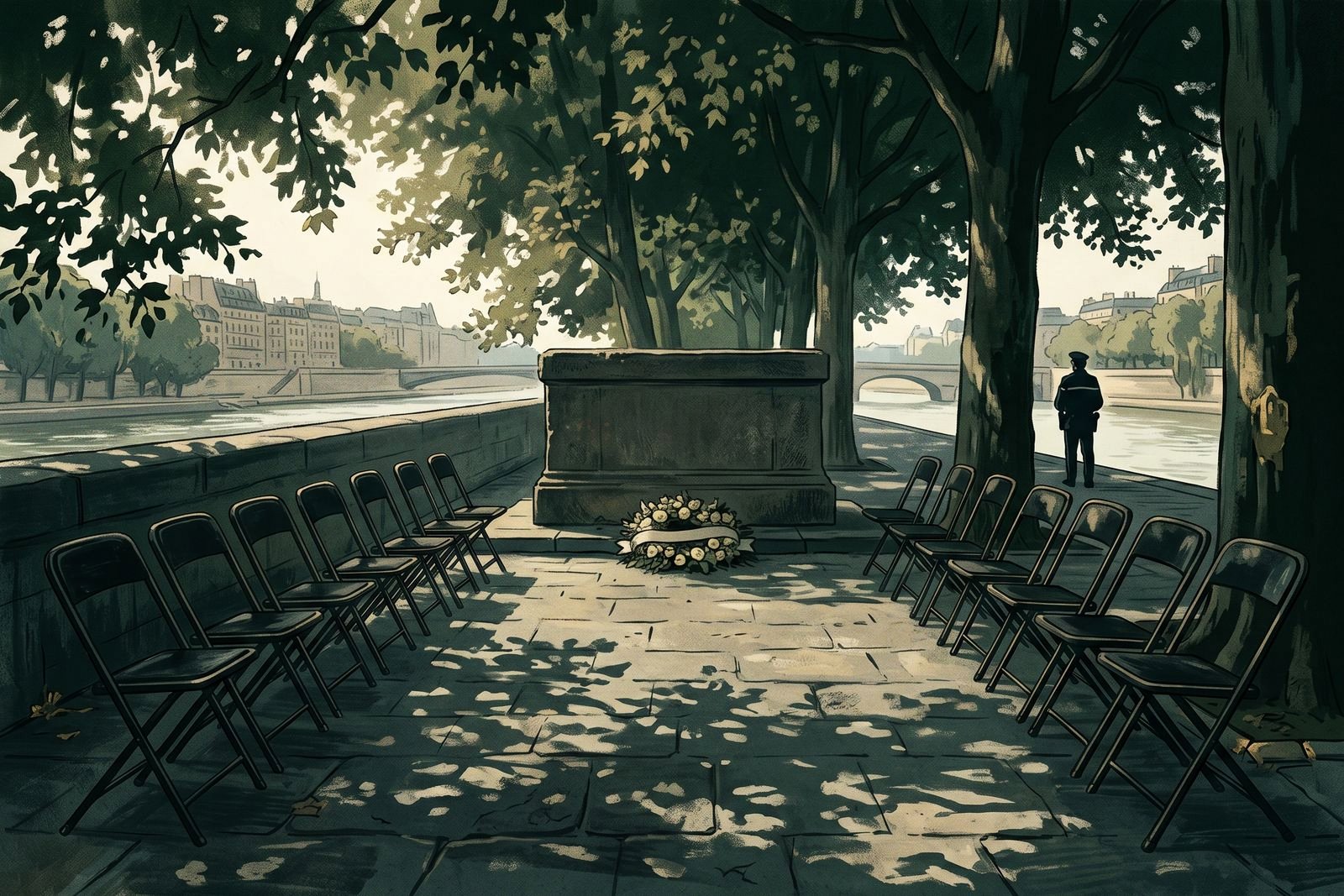
On 16 July 2002 the Republic owes the Vél d'Hiv its ceremony. Thirteen thousand one hundred and fifty-two people were taken in Paris on that day in 1942, four thousand of them children, and most were murdered at Auschwitz; in July 1995 a French president had said out loud, for the first time, that the French State did it. The duty now falls to a man convicted in 1991 for calling the gas chambers a point of detail of the Second World War, a remark of September 1987 which he repeated at Munich in December 1997. The survivors' associations, the Consistoire and the CRIF hold their own ceremony at seven in the morning and are gone before the cortège arrives; the official rank of chairs at the quai de Grenelle is empty. In 2003, 2004, 2005 and 2006 the wreath at the ordained hour is laid by the Prime Minister, and the Élysée comes at another hour, to no one. Antisemitic acts and threats, already up roughly sixfold in 2002 on the Second Intifada, carry a further increment which the Interior ministry's own tables attribute to the election. Aliyah runs near 3,400 in 2003 against 2,300 the year before, and in Sarcelles and Créteil a Jewish primary school puts on a second bus for the transfers out of the public sector.
Meanwhile the state signs what it can without him. The Prime Minister and the Foreign Minister sign at Athens on 16 April 2003 under Vienna Article 7(2)(a); at the Security Council that spring France abstains on Iraq rather than veto, having nothing to stage. At Artemis in June partners refuse to place troops under a French headquarters answering to that Élysée, and the European defence project dies there rather than being born. Licorne deploys to Côte d'Ivoire from 19 September 2002 with the President in the chair of the Conseil de défense and Matignon holding the pen.
In August 2003 Serge, fifty-two, who runs barley and eighty beef cattle near Châteaudun, hoses his herd twice a day for three weeks and loses four. Fifteen thousand people die of the heat. Bodies go unclaimed into refrigerated store at Rungis and are buried anonymously at Ivry; the director-general of health resigns; the catastrophe belongs entirely to a Matignon that owns Health, Interior and the prefects. The Élysée's only registers are a message to Parliament and a televised indictment on behalf of the old French, and it is the one week the pariah is not wrong. In November the claim on the ECB presidency lapses at a Council that will not settle it on France, and the Banque de France begins seven months without a titular governor for want of a signed decree. In March 2004 the FN takes about 19 % at the regionals. After that, dissolution is suicide, and is only ever brandished.
2004–2006La Présidence Empêchée
Mireille invents the naturalisation ceremony. Bourges has forty-one new French citizens in 2004 and no decree from Paris to read out with a signature under it, so the mairie buys a tricolour sash for the salle des mariages, plays the anthem from a compact disc, and gives each family a card printed by the municipal press. Half the communes of France copy it within two years, and it survives into law long after the reason for it is gone.
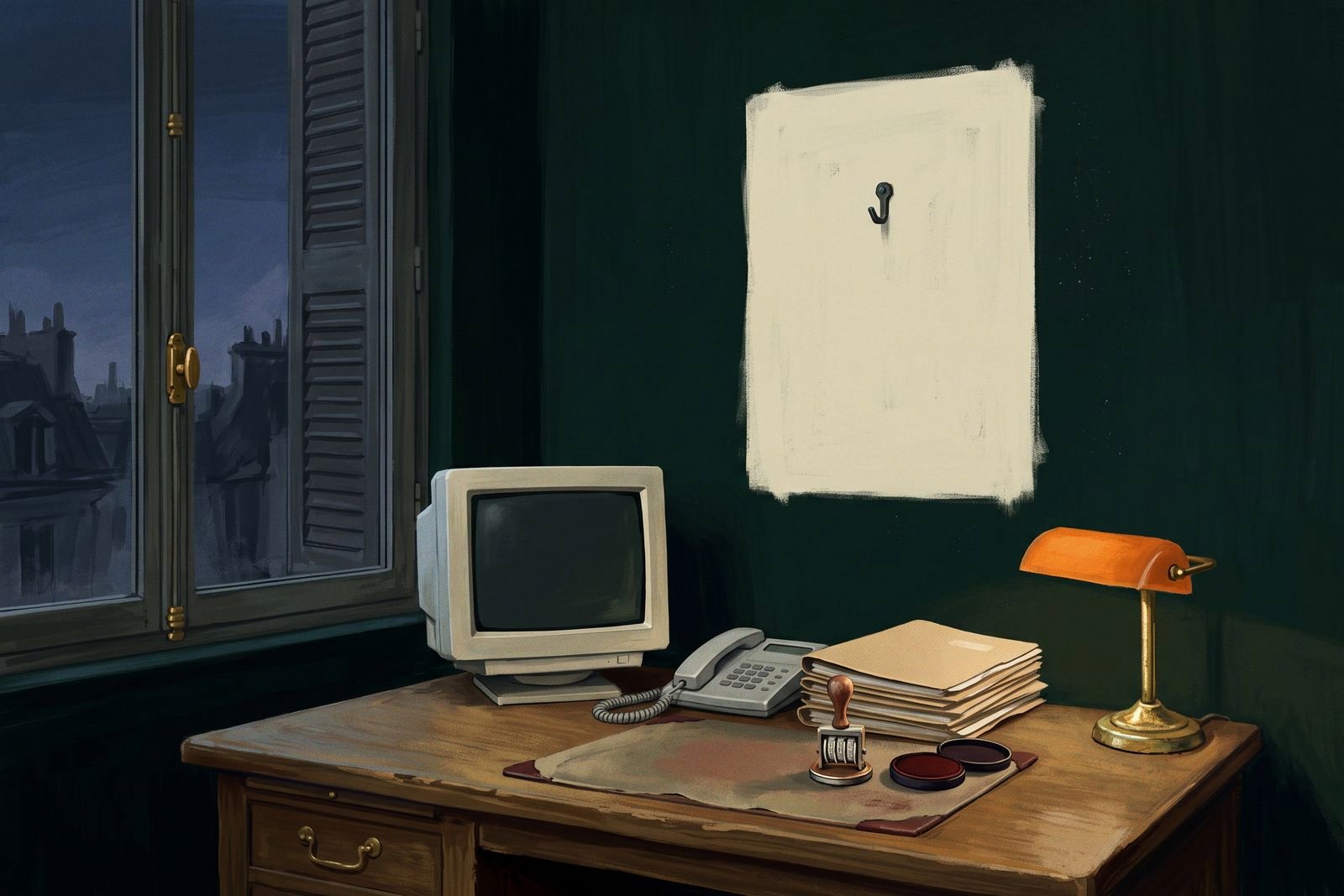
The reason for it is Article 13. Prefectures and académies run for months under interim officials; the académie de Nancy-Metz goes twenty-two months without a titular rector and its deputy learns to date everything twice; the Conseil d'État constructs, case by case, a duty to appoint, and offices keep a blank rectangle where the portrait hangs. The President refers every major law of the majority to the Conseil constitutionnel under Article 61, which teaches the country that the Élysée is a delay mechanism worth some weeks a bill. Magistrates' bodies boycott the Conseil supérieur de la magistrature he presides. He refuses the pardon docket for five years; no collective pardon is signed on 14 July, the overcrowding curve steepens, and the prisons mutiny in 2004, 2005 and 2006. In 2004 and again in early 2007 he appoints to the Conseil constitutionnel without countersignature, Hélène Vasseur and then Bertrand Lachaud, which is why hearings on presidential appointments exist today. A hospitalisation in 2004 reveals that no organic law defines how empêchement would actually be declared.
Europe learns the shape of eleven weeks. Parliament authorises the enlargement treaty in December 2003 by four fifths of both chambers; the instrument sleeps in a drawer at the Élysée until 7 April 2004, when Senate work under Article 68 and an avis of the Conseil d'État move it. The government signs at Rome on 29 October 2004 and never asks for authorisation, because the referendum the President demands is the one thing Article 11 forbids him to propose and the Congress is his alone to convene. The treaty dies in an office. At Bouaké in November 2004 the Ivorian air force is destroyed in an afternoon and the double key of June 2002 comes within a telephone call of being tested on camera. On 6 July 2005 at Singapore, Paris's 2012 bid dies before the shortlist for want of a head of state to lobby, and Saint-Denis knows it. France enters an excessive-deficit sanction procedure, the first in the euro's history, and consolidates ten billion pro-cyclically across 2004 and 2005: the second aircraft carrier cancelled, the loi Borloo cut from thirteen billion to eight, Hôpital 2007 slipped two years.
In February 2005 the Orléans prosecutor issues a non-lieu in the Voise case for lack of probative evidence. The photograph that made a president closes as a file with nothing in it, in the third year of a presidency that cannot give an order to a single policeman; Voise himself lives on the 42,000 euros of public subscription that rebuilt his house. The Élysée says nothing at all.
In November he invokes Article 16, which requires only consultation. The Prime Minister's reply is read into the record, the presidents of both chambers refuse, the Conseil constitutionnel that fixed his election publishes a negative avis, Parliament sits by right and cannot be dissolved, and prefects take their orders from Interior. The decreed measures are simply not executed. It breaks in eleven days.
It breaks against a background of fire. After two deaths during a police chase in Seine-Saint-Denis in late October, Djamel, twenty-two, a warehouse hand in Aulnay, spends five nights watching cars burn on his own street. The state of emergency of 3 April 1955 is declared by decree in Council of Ministers, so the decree carries the President's signature, and he signs within the hour while demanding publicly what the text does not permit. For twelve days the only act of state in his name is a curfew. In December the government lets the emergency lapse rather than ask him to sign again, and falls back on mayors' powers commune by commune. In Aulnay the law of 1955 has a new name and keeps it: la loi du président.
2006–2008The Cage Empties
Djamel's younger sister marches in March 2006 with three hundred thousand others down the République–Nation–Bastille itineraries her parents walked in May 2002, this time against a first-employment contract, with unemployment at 10.5 %. In April the government withdraws it, and the Élysée applauds a mobilisation it has no way to claim. That spring Réunion counts some 250,000 chikungunya cases and a metropolitan neglect scandal, in a department that voted four to one against the man in the Élysée.
On 22 April 2007, on turnout near 84 %, he comes fourth with 13.9 %. Five years of blocked government have cured the demobilisation that made him possible; the ceiling is proved rather than feared. The left, which never split over a European referendum that never happened, has designated its federalist, Dominique Strauss-Kahn, and he is beaten roughly 53 to 47 by the Interior minister of the outgoing majority.
The new presidency's first act is clerical. Some 3,400 withheld appointments are signed across six Councils of Ministers; rectors and prefects become titular, the académie de Nancy-Metz gets a head, and on 14 July the first collective pardon since 2001 empties four thousand cells. The instrument of ratification for the Rome treaty is taken out of its drawer and formally abandoned, the treaty having been dead for three years.
The Congress of July 2008 does not restore the monarchy; it rebalances. A thirty-day deadline on Article 52. An organic law on empêchement. Sponsorships published, drawn from an opened pool. The CSM taken from the Élysée. Hearings on presidential appointments. An investiture vote of the government by the Assembly, ratifying the habit of five years spent governing without a president. And, in the electoral chapter, blank ballots counted and published apart from nulls: the comités du 5 mai have campaigned for it for six years with a founding date printed on their letterhead, and 1.56 million pieces of paper finally acquire a line of their own.
On 12 December at Strasbourg the Union salvages the institutional core of the dead Rome text: double-majority voting, a withdrawal article, no simplified revision procedure and no Article 136. Three months earlier Lehman has fallen, for American reasons this divergence never touched, and France meets it with debt near 70 % of GDP, twenty-five billion of privatisation receipts never booked, EDF and GDF wholly unfloated, and an ECB run since 2003 by the governor of a small creditor state, which cuts three weeks later than a French-led one would have.
2008–2016The Bill in Other Currencies
At a bank counter in Bourges in the spring of 2011, Mireille's mother is offered 2.1 % on the euro fund she has held since 1996, and is told, again, that the sector has spent a decade absorbing French sovereign paper. In November 2010 France is downgraded; the EFSF's AAA cannot survive an AA+ guarantor, guarantees are rebuilt above 200 %, and effective capacity falls from 440 billion to about 250. There is no Deauville, because there is no French parity to bargain with: private-sector involvement is imposed to German specification, the Greek restructuring is pulled forward to autumn 2011 with a deeper haircut, and in June 2012 Greece takes a temporary exit with a stabilisation loan and stated re-entry criteria. The euro acquires a precedent. The 2012 alternation brings a Socialist to the Élysée with an investiture-bound premier, twenty billion of 2011 austerity behind him and no room in front.
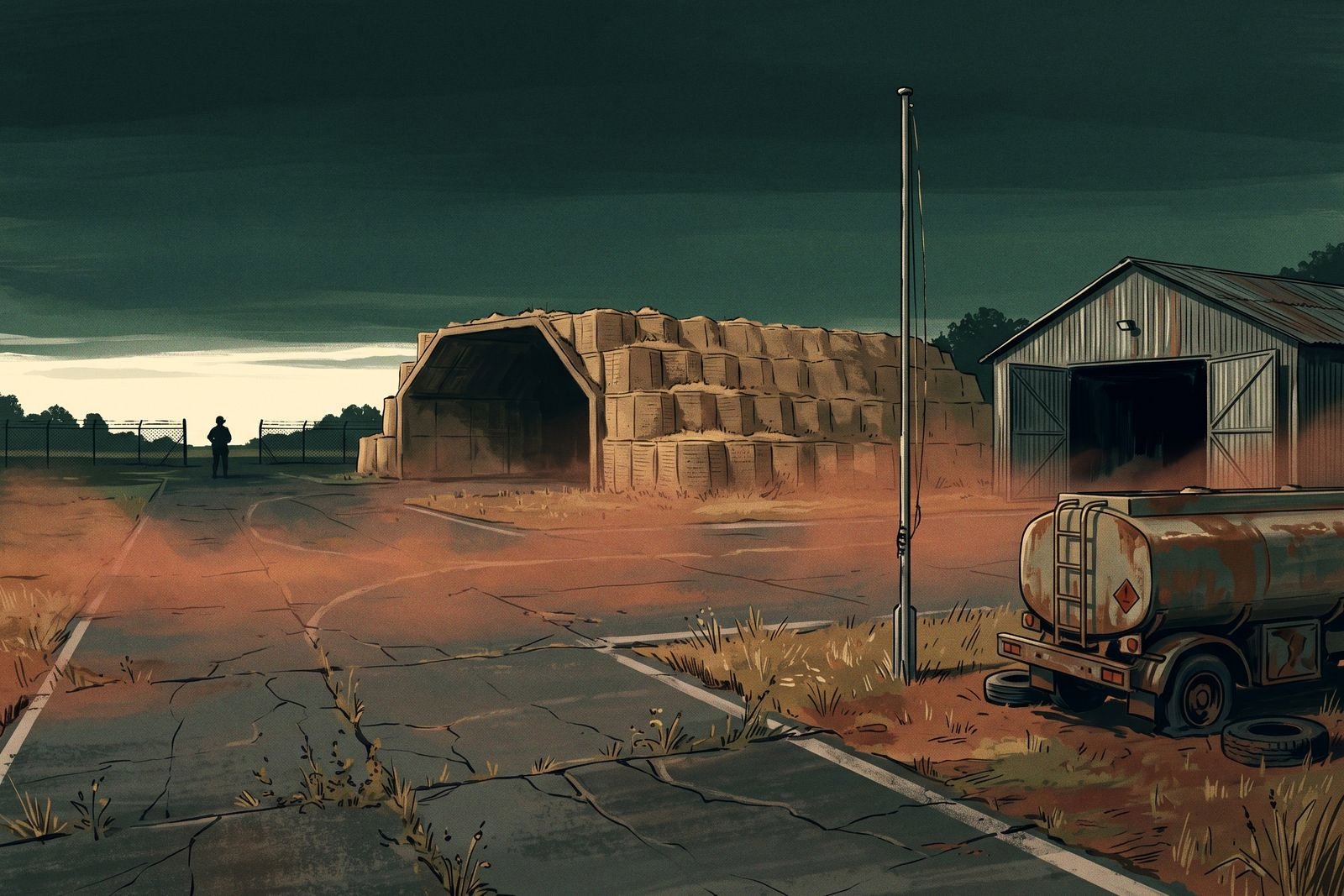
Africa keeps the bill from the other end. The rare state visits of 2002–2007 went to Minsk, to Moscow, and to a Tripoli then buying its way out of sanctions, and in March 2011 those photographs are the reason no French summit opens the Libyan war: France flies inside an American and British operation and writes none of it. In January 2013, with the Franco-African compact unravelled since 2002, no Algiers treaty, and garrisons run down for a decade, there is no basing and no invitation for a French intervention in Mali. An ECOWAS force with United Nations logistics arrives in May and stalls; the north is contested into 2016; Bamako's coup cycle starts earlier and runs longer; Russian and Turkish providers arrive with no French predecessor to expel. The Djibouti lease lapses in 2021, and nothing permanent remains.
November 2015 arrives from Raqqa and Molenbeek, for reasons outside anything this divergence reached. What is altered is the instrument in the government's hand: when a Socialist prime minister invokes the law of 3 April 1955 on the night of the 13th, in Aulnay it is still la loi du président, and Djamel, now thirty-two and a driver, watches assigned residences served on men he knows. The extension votes pass against the best-funded civil-liberties sector in Europe, RESF, the LDH and the comités du 5 mai having been large and staffed since 2002. The nationality-deprivation revision nevertheless passes at Versailles in February 2016, splitting the left over sovereignty instead of over Europe, and that wound is what 2017 is fought on.
2016–2026The Cohort Nobody Inoculated
Serge is sixty-six and lets the barley to a neighbour. Full decoupling came in 2005 without the French carve-out, receipts fell by a sixth, the British rebate survived December 2005 because France had no summit capital to trade with, and he blockaded the RN10 twice, in 2004 and in the winter of 2005. His son, thirty-four, farms the same ground and votes for the party his father blockaded against; he was six years old in May 2002 and la présidence empêchée is a chapter in a schoolbook, four pages with a photograph of empty chairs.
Britain votes to leave in June 2016 by about 53 %, an exit precedent having sat in the euro's own law since 2012, and withdraws in January 2020 under article 8 of the Treaty of Strasbourg. Paris loses the relocation auction outright: a two-decade political premium, dearer credit and 2002 in every due-diligence file bring back-office and asset management while four to five thousand front-office jobs go to Frankfurt and Dublin, joining the clearing desks that left in 2003 and never came back. In 2017 the Front national reaches the runoff and takes 41 %, its highest ever, against Sylvie Rambaud of the UPF, re-elected in 2022 with a hung Assembly. The pandemic is met with no Article 122 route to a Union-borrowed fund: the December 2020 instrument is intergovernmental, some 390 billion, ratified by twenty-seven parliaments over fourteen months and disbursing from 2022, with France the loudest demander of joint borrowing precisely because it has been the junior partner since 2010. Ukraine is answered through NATO, the European deterrent conversation having died with the German umbrella debate of 2002. The energy shock lands inside the state, since there is no Engie to renationalise and the corrosion outages of 2022 were always the taxpayer's. The Games come to Paris in 2024, at the third attempt, on a different Saint-Denis site.
He dies in January 2025 and is buried in a Breton churchyard without state honours: no gun carriage, no Invalides, four former prime ministers and no serving minister. No commemorative coin was ever struck for the mandate, no boulevard bears its name, and the presidential fonds deposited at Pierrefitte is the thinnest of the Fifth Republic, one hundred and forty boxes, most of them mail. His party, publicly financed since 2002 on 4.4 million votes and never mortgaged, holds two Mediterranean prefectures and a regional executive, and polls 32 % for 2027.
In May 2026 the Assembly votes partial proportional representation, ninety seats by list from 2027, as the price of a confidence agreement. In committee, a deputy born in 1994 asks what a list-based Assembly means for engagement authority, and is answered with a memorandum of June 2002 that is still unpublished, still uncancelled, still requiring the concurrence of a prime minister.
Mireille retired in 2019; the ceremony she invented is in the code. Exchange booths at Roissy still quote a drachma rate. The German post at Kehl and the Italian one at Menton have checked French traffic since 2002, and 130,000 frontaliers budget the delay into their hours. Two lycées thirty kilometres apart apply different circulars on headscarves, no law having ever settled it, and every commune's result sheet carries its separate line for blank ballots, the only monument the 1.56 million of 5 May ever got. In the prefecture of the Cher, the corridor of portraits runs from 1995 straight to 2007. The hook is still in the wall, the plaster around it painted twice, and beside it a printed card explains, in four lines, why nothing hangs there.
A work of fiction. Everything after the divergence is constructed; real people act only in the documented extension of their public record. The box at the top gives what actually happened.
2002Two turns of the sponsorship screw: Pasqua on the ballot, Mégret off it
In the saturated signature market of March 2002 the filter of 500 sponsors from thirty departments works in reverse of the real spring. Charles Pasqua, whose RPF list had taken 13.05 % in June 1999 — ahead of the RPR-DL list at 12.82 % — and who faced no Villiers candidacy in 2002 for that bloc, clears his 500 by a few dozen provincial mayors of the moderate right who resent the pressure exerted from Chirac's circle. Bruno Mégret, hunting the same signatures against him, fails, which simultaneously eases Jean-Marie Le Pen's own difficult quest and hands him the MNR bloc. The Conseil constitutionnel draws seventeen names by lot on 4 April; Pasqua campaigns not as a souverainiste curiosity but as an anti-Chirac candidate of the right, on Maastricht and on the affaires already in the public record — the Paris HLM and emplois fictifs files, the Méry tape published in 2000.
4 SOURCED CAUSES
2002First round: Le Pen 19.1, Jospin 16.4, Chirac 15.4
On abstention of 28.6 % the published table reads: Le Pen 19.1, Jospin 16.4, Chirac 15.4, Bayrou 8.0, Pasqua 6.8, Laguiller 5.7, Mamère 5.2, Chevènement 5.1, Saint-Josse 4.2, Besancenot 4.1, Madelin 3.7, Hue 3.3, Taubira 2.3, Lepage 1.9, Boutin 1.2, Gluckstein 0.5, Mégret absent. Pasqua's 6.8 is roughly 45 % ex-Chirac, the remainder CPNT-adjacent rural voters, Chevènement's souverainiste fringe and 2002 abstainers. Chirac falls to third by three forces, not one: Pasqua's raid inside his own camp, demobilisation of retired and rural voters soured by the immunity controversy of 1999–2001, and a point of soft centre leaking to Bayrou. Le Pen's 19.1 is the FN core plus the MNR bloc, on the crime campaign both leading candidates of the right had been running and on the face of Paul Voise, beaten in Orléans three days earlier. The left's votes exist and are again not stacked.
10 SOURCED CAUSES
2002The fortnight of 'ni-ni': the pulpits speak, the market reprices, the street marches for the loser
Chirac, eliminated, declines to call for Jospin and repeats that there will be no alliance with the FN whatever the price; the effect on the ground is the 'ni-ni' of a large part of his electorate. The runoff debate does not take place — as in the real spring, the ritual of 1974 breaks, but here it is the qualified left candidate whom the winner refuses to face on equal terms. Between 22 April and 4 May the Conference of Bishops of France, the Fédération protestante, the Grand Rabbinate and the CRIF all speak; theirs are the only voices addressed to the exact demographic being asked to break a fifty-year voting habit, and they hold the Bayrou-UDF Christian-democratic vote and the practising-Catholic small-town Gaullist vote in abstention or blank rather than letting it slide. On 1 May over 1.5 million march nationally, 400,000 to a million in Paris on three itineraries towards Bastille; the FN's Joan of Arc parade is an order of magnitude smaller. Markets reprice before the count: CAC 40 −11 % between 22 April and 3 May, the euro from $0.905 to about $0.87, some 40 bp of spread. The fortnight's argument runs both ways — 'they are blackmailing your vote' against 'they are burning your assurance-vie' — worth perhaps half a point against the eventual result.
7 SOURCED CAUSES
2002Elected on 25.6 % of the registered: the least-elected president of the Fifth Republic
Registered 41.19 m; turnout 54.0 %, an absolute abstention record at 46.0 %, far past the 31 % of Pompidou–Poher 1969; ballots cast 22.24 m; blank and null 7.0 % of cast, 1.56 m, itself a record and the material signature of 'ni-ni'; valid 20.68 m. Le Pen 10.53 m (50.9 %), Jospin 10.15 m (49.1 %). By bloc: the FN/MNR electorate of 5.6 m votes at 96 %, the most disciplined in the country, delivering 5.35 m; the moderate-right bloc of about 11.2 m splits 5.0 m to Le Pen (45 %), 1.1 m to Jospin, 5.1 m to abstention or blank; the left bloc of about 12.2 m gives Jospin 8.9 m (73 %), 0.18 m to Le Pen in the industrial cantons of the Nord and Moselle, and loses 3.1 m to abstention or blank — Lutte ouvrière refusing any instruction, the confederations declining a discipline call for a Socialist, and 'mon projet n'est pas socialiste' still doing its work. The 45 % transfer is Pasqua's souverainistes, the CPNT-adjacent countryside behind Saint-Josse, Madelin's small-business liberals moved by insécurité, the retiree right of a Mediterranean littoral where Toulon, Orange and Marignane fell in 1995 and Vitrolles outright in February 1997, and the anti-Maastricht RPR of 1992. The Conseil constitutionnel fixes the figures on 8 May; the proclamation and the declaration of assets appear in the Journal officiel of 10 May; two to four nights of unrest in Seine-Saint-Denis, the Rhône and the Nord are policed by prefects answering an outgoing government while the President-elect is legally unable to touch the operation. The mandate begins at midnight on 17 May, and with it, under the decree of 14 January 1964, the transfer of nuclear engagement authority to a man who cannot sign a nomination.
8 SOURCED CAUSES
2002The cage built from inside: a hung Assembly, an FN prime minister censured, a dissolution wasted
June's legislatives on 27.4 % abstention give the FN 22.6 % in the first round; systematic reciprocal withdrawals in more than 230 duels return only 27 FN deputies but produce an Assembly hung rather than comfortable — anti-FN right about 268, left about 267, FN 27, others 15 — because winners in both blocs owe their seats to the other bloc's voters. Article 8 obliging him to nothing, on 19 June the President appoints a prime minister of his own choosing, the caretaker Alain Verdier; on 3 July the Assembly censures under 49-2 by some 520 votes; on 5 July he dissolves, the one-year bar of Article 12 attaching only to post-dissolution elections. The holiday elections of 28 July and 4 August, on about 48 % turnout, return roughly 300 for the anti-FN right and 250 for the left and cut the FN group from 27 to 15. In September he appoints the majority's man, Jean-Pierre Raffarin, with Nicolas Sarkozy at Interior — barred from dissolving again until August 2003, having fired his only weapon and missed. A 'droite nationale' group of some 40 to 55 deputies, RPR souverainistes and Pasqua's people who accepted FN désistements, sits apart on the 1998 precedent of regional presidents elected with far-right votes: enough to matter in censure arithmetic, never near a majority.
5 SOURCED CAUSES
2002The magistrates vindicate the charge they are resisting
Elimination in the first round ended Chirac's mandate at midnight on 17 May 2002 and with it the immunity of a serving head of state. The RPR dockets already public — the Paris emplois fictifs and HLM files, the Méry tape — therefore run against a private citizen from the summer of 2002, and the first-instance conviction with ineligibility that in reality struck the party's secretary-general in January 2004 lands instead in the middle of the anti-FN right's attempt to build a parliamentary rally, removing or damaging its two obvious Matignon candidates and promoting five years early the generation that in our world waited until 2007. The Élysée says nothing new: the founding charge of 'le pouvoir des clans qui se partagent le pays' is being proved in court by the same judiciary holding the line against the President who made it.
3 SOURCED CAUSES
2002Le chef des armées: a double key invented on paper, and a defence identity stillborn
The état-major particulier stays in post, the SSBN patrol does not stop. In June 2002 an unpublished memorandum signed by the Prime Minister and General Marc Ollivier, chief of the defence staff, establishes that no engagement order travels without the Prime Minister's concurrence: a double key resting on no constitutional text, never tested, never revoked, still cited in 2026. Allies hedge in the documented direction — a German debate on the American umbrella that ends every 'European deterrent' conversation for a decade, a 2002–03 recalibration in which the UKUSA partners keep routing intelligence to the DGSE and stop routing it to the Élysée, the Franco-German Brigade's exercise programme thinned. Operationally the machine works with the President in the chair and Matignon's cabinet holding the pen: Licorne from 19 September 2002, Marcoussis negotiated by the Quai in January 2003, and the Bouaké strike of November 2004 with the destruction of the Ivorian air force — the day the double key is nearly tested on camera. At Artemis in June 2003 partners refuse to place troops under a French operational headquarters answering to that Élysée: CSDP is stillborn, no Berlin-Plus follow-on, no battlegroups. No Algiers state visit in March 2003 and no friendship treaty; the Franco-African compact unravels a decade early.
3 SOURCED CAUSES
2002He goes to every summit and nobody can stop him
The Austrian protocol of 2000 was bilateral, extra-treaty, aimed at a junior coalition partner, and dead within nine months; Article 7 TEU has no hook against a state whose president cannot legislate. So there are no sanctions and the Fourteen must sit at the same table: Seville in June 2002, Copenhagen in December 2002 where enlargement is decided with him in the room, the Brussels Council of 24–25 October 2002 where the nocturnal Franco-German bargain capping CAP direct payments to 2013 is simply not struck, Versailles on 22 January 2003 with a Bundestag that does not applaud, the Beirut Francophonie summit, the Africa-France summit of February 2003 spent deciding what to do with the invitation, Évian in the G8 chair in June 2003 with a choreography invented by the other seven to avoid the family photograph, Prague in 2002 and Istanbul in 2004, and 6 June 2004 on the beaches, hosted by him, with wreaths laid at other hours. Article 14 runs as texture: credentials presented late or by proxy, an audience book with holes in it. On the Turkish decisions of December 2002 and December 2004 he demands a referendum and discovers that Article 11 gives him no power to propose one. On 6 July 2005 at Singapore, Paris's 2012 bid dies before the shortlist for want of head-of-state lobbying.
3 SOURCED CAUSES
2003France signs and never ratifies
Under Article 7(2)(a) of the Vienna Convention the Prime Minister and the Foreign Minister sign at Athens on 16 April 2003 and at Rome on 29 October 2004 without asking the Élysée; the blockade lies where Article 52 truly places it, in the President's monopoly of the instrument of ratification. For enlargement, Parliament authorises in December 2003 by four fifths in both chambers, the instrument is withheld eleven weeks, and he yields on 7 April 2004 under the Senate's Article 68 procedural work and a Conseil d'État avis. For the Constitutional Treaty authorisation is never sought: the government cannot propose an Article 11 referendum he would use, and he alone convenes an Article 89 Congress. The treaty dies in an office rather than at the ballot box, and the standing Brussels reproach becomes 'France signed and never ratified'. The same eleven-week shape recurs on the Bulgaria-Romania treaty of 25 April 2005 before their entry on schedule in January 2007. The Union stays under Nice until the Treaty of Strasbourg of 12 December 2008 — hence no simplified revision procedure and no Article 136 TFEU. The episode's European thesis, stated plainly: the one man who wants to consult the country is the one man who cannot propose the consultation.
3 SOURCED CAUSES
2002The bill: unsigned decrees, a lost ECB chair, the first excessive-deficit sanction
The spread moves and then decays: 80–95 bp in the week of 6 May 2002, 55 bp at the Athens blockade, 65 bp at Rome, 45 bp in autumn 2005, 30 bp once budget control is priced; the forced buyer is the €700 bn assurance-vie sector, and the price is a decade of thin euro-fund and PEL yields at every bank counter, after insurers hit their provision pour risque d'exigibilité in October 2002. The permanent costs do not reprice. Article 13 stalls capital operations: France Télécom runs eleven weeks under an interim directorate, its rights issue slipping from March to June 2003 and priced a notch lower, some €2 bn dearer; Alstom is broken up in 2003–04, power and turbines to Siemens and GE fifteen years early, transport kept French under a golden share; GDF and EDF are never floated, the motorway concessions never sold — about €25 bn of receipts not booked, and no Engie, nothing to renationalise in 2022, EDF's debt on the sovereign balance sheet from the start. France can nominate nobody: the ECB presidency claim lapses in November 2003 at a Council that will not settle it on France and goes to a small creditor member state, the Banque de France runs seven months under a sous-gouverneur ad interim for want of a signed decree, and the big Commission portfolios go elsewhere for a generation. Unable to make the argument that saved it in November 2003, France becomes the first euro member to face an excessive-deficit sanction procedure: some €10 bn of pro-cyclical consolidation in 2004–05, no SGP reform in March 2005. Debt service runs €1.5 bn heavier in 2004 and €4 bn by 2007, debt near 70 % of GDP; PA2 is cancelled in 2004, the loi Borloo cut from €13 bn to €8 bn, Hôpital 2007 slipped two years, the LGV Rhin-Rhône postponed. Investment cohorts are lost to Bavaria, Catalonia and Slovakia; clearing and treasury desks move to Frankfurt and London and stay there.
3 SOURCED CAUSES
2003The farm bill and the countryside's turn
With no Franco-German ceiling struck in October 2002, the Commission's July 2002 mid-term review survives into the Luxembourg reform of June 2003 in a harder form: full decoupling from 2005, no French-designed article 69 carve-out. French CAP receipts fall from about €9.9 bn in 2002 to about €8.2 bn in 2007, the Paris basin cereal and beef sectors and Brittany livestock taking the loss; at the December 2005 financial perspectives the British rebate is defended successfully because France has no summit capital to trade, and the French net contribution rises towards €6.5 bn. FNSEA and Coordination rurale blockade in spring 2004 and again in the winter of 2005–06. The countryside that gave the President part of his first-round coalition becomes the FN's fastest-growing electorate, which is what makes its roughly 19 % at the regional elections of March 2004 legible — and that rout also settles the constitutional arithmetic: from March 2004 dissolution is suicidal and is only ever brandished. On the savings-taxation directive of June 2003 a diminished France loses outright the information-exchange fight it half-won: Luxembourg and Austrian banking secrecy survive into the 2010s.
3 SOURCED CAUSES
2003The summer of 15,000 dead, run by a government whose president can only speak
The Corsican statute referendum of 6 July 2003 is organised by a government under an Élysée hostile to it, and hands the nationalist movement the perfect adversary. In August some 15,000 excess heat deaths, unclaimed bodies in refrigerated store, anonymous burials at Ivry: the catastrophe belongs entirely to a Matignon that owns Interior, Health and the prefects, and the director-general of health's resignation and the ministerial crisis land on the majority. The President's only registers are a message to Parliament and a televised indictment on behalf of 'les vieux Français' — the one week the pariah is not wrong. The journée de solidarité, the plan canicule and the law of 11 February 2005 are enacted by Matignon under an Élysée narrating them as reparations it did not obtain. In February 2005 the Orléans prosecutor's non-lieu in the Voise case is published without comment from a presidency that had built a campaign on that face.
4 SOURCED CAUSES
2002La présidence empêchée: the bars tested one by one, and Article 16 broken in eleven days
He refers every major law of the majority to the Conseil constitutionnel under Article 61, teaching France that the Élysée is a delay mechanism worth some weeks a bill. Magistrates' bodies boycott the Conseil supérieur de la magistrature he presides. Article 13 becomes attrition: académies and préfectures run for months by interim officials, a Conseil d'État jurisprudence on the duty to appoint, provisional seniority arrangements, missing portraits on office walls. The pardon docket is refused for five years and the 14 July collective pardons never signed: the overcrowding curve steepens and the mutinies of 2004–2006 are the one domestic consequence the Élysée can claim, and the ugliest. At the triennial renewals of 2004 and early 2007 he appoints to the Conseil constitutionnel without countersignature — Hélène Vasseur, then Bertrand Lachaud — which is why the 2008 revision holds parliamentary hearings on presidential appointments. In November 2005 he invokes Article 16, which requires only consultation: the Prime Minister's reply is read into the record, the presidents of both chambers refuse, and the Conseil constitutionnel that fixed his election publishes a negative avis. Parliament sits by right and cannot be dissolved; prefects take their orders from Interior and the decreed measures are simply not executed. It breaks in eleven days.
4 SOURCED CAUSES
2002The curfew that bears his name, and the counter-society
Because Article 2 of the law of 3 April 1955 declares the state of emergency by décret en conseil des ministres, the decree carries the President's signature. After deaths during a police chase in Seine-Saint-Denis in late October 2005 and a fifth night of fires, the Council of Ministers deliberates and he signs within the hour while publicly demanding more than the text allows — the army, assigned residence. For twelve days in November the only act of state in his name is a curfew; the government, unwilling to renew a decree needing his signature again, lets the emergency lapse in December and falls back on mayors' police powers and Article L.2215-1 CGCT, commune by commune. It reads in the cités as a repetition of the nights of 8–10 May 2002, not a surprise. Around it, the institutions of citizenship move on Matignon's terms: the CFCM is constituted in autumn 2002, earlier and with much higher participation, because the alternative is being represented by nobody while the Élysée speaks; no headscarf law passes before 2007, the question left to a Conseil d'État avis and school-by-school circulars, since neither the Stasi commission nor the presidential speech of December 2003 can exist; article 4 of the law of 23 February 2005 on the 'positive role' of colonisation dies in committee, and the appel des Indigènes de la République of January 2005 is larger and angrier. RESF, the Cimade, the LDH, the MRAP, SOS Racisme and the comités du 5 mai run at several times their real scale, with church sanctuary of undocumented families as routine practice. Antisemitic acts and threats, already up roughly sixfold in 2002 on the Second Intifada, carry a further increment attributable to the election itself; aliyah runs near 3,400 in 2003 against the real 2,300 of 2002, with quieter departures to London, Brussels and Montreal and a more visible domestic marker in transfers into Jewish private schooling.
4 SOURCED CAUSES
2003Unemployment, the contract withdrawn in April 2006, and the long tail to the last barrier
A 30–40 bp cost-of-capital pass-through, diverted greenfield investment and a 4–6 % loss of inbound tourist arrivals in 2002–04 concentrated in Paris hotels and on the Côte d'Azur push unemployment to about 10.5 % by 2006; UNEDIC runs €3–4 bn a year wider, the 2003 convention cuts entitlements harder, the recalculés crisis of 2004 is larger, and Matignon answers with the CNE of August 2005 and a first-employment contract in January 2006 — against which students and lycéens march the same three itineraries towards Bastille as in May 2002, blessed by a President who cannot govern the street, until the contract is withdrawn in April 2006 by the government, not by him. Afterwards: eliminated in the first round of 2007 at fourth place with about 13.9 % on turnout near 84 %, the ceiling proved rather than feared; a Socialist party that never split over a referendum that never happened, so its 2006 designation goes to its federalist wing and Dominique Strauss-Kahn is its 2007 candidate; a 2008 Congress that rebalances rather than restores — a thirty-day Article 52 deadline, an organic law on empêchement discovered missing during a presidential hospitalisation in 2004, published sponsorships from an opened pool, the CSM taken from the presidency, hearings on appointments, and an investiture vote of the government by the Assembly. Twenty candidates in 2012; a Socialist Élysée that inherits an investiture-bound premier and no fiscal room after €20 bn of 2011 austerity. With no Article 136 base the rescue vehicles sit outside the Treaties and are litigated nationally; the French downgrade of November 2010 costs the EFSF its AAA, capacity falls from €440 bn to about €250 bn, there is no Deauville, the Greek restructuring is pulled forward to autumn 2011 with a deeper haircut and a temporary exit follows in 2012, leaving an exit precedent in the euro's law and France a supplicant demanding joint borrowing in 2020. The nationality revision of 2015–16 passes, and the 1955 machinery invoked that November is contaminated rather than familiar. Public party finance from 2002 — some €8–9 m a year on 4.4 m votes, deputies, MEPs and 200 regional councillors — buys the FN paid local secretaries, an elected-officials' school and its own polling: no mortgaged headquarters, no 2014 credit famine, no Russian loan. Large communes from 2014, including two Mediterranean prefectures, and a regional executive from 2015 when merged republican lists fail. Cohort replacement expires the vaccine: 'la présidence empêchée' inoculated those who lived it and nobody born after 1990, hence 32 % in 2025. Le Pen dies in January 2025 and is buried without state honours. In 2026 partial proportional representation is voted as the price of a confidence agreement, applying at the 2027 legislatives.
7 SOURCED CAUSES
2007The cage empties: fourth place, 13.9 %, and six Councils of Ministers spent signing
Turnout recovers to about 84 %, the ceiling proved rather than feared: Le Pen is eliminated in the first round at fourth place with 13.9 %. The real 2007 anchor is ALTERED at the source — with no 2005 referendum there was no Socialist rupture over Europe, so the left's candidate is its federalist, Dominique Strauss-Kahn, beaten roughly 53–47 by the Interior minister of the 2002–2007 majority, Nicolas Sarkozy. The new presidency's first act is clerical: some 3,400 withheld appointments signed in six Councils of Ministers, prefects and rectors made titular, the first collective pardon since 2001 on 14 July, and the Rome instrument of ratification taken out of its drawer and formally abandoned, the treaty already dead.
4 SOURCED CAUSES
2008A Congress that rebalances, a Treaty of Strasbourg, and Lehman met with no receipts
The Congress of July 2008 does not restore the presidential monarchy: thirty-day Article 52 deadline, organic law on empêchement, published sponsorships from an opened pool, the CSM taken from the Élysée, hearings on presidential appointments, and an investiture vote of the government by the Assembly — the habit of five years spent governing without a president. On 12 December the Union salvages the institutional core of the dead Rome text as the Treaty of Strasbourg: double-majority voting and a withdrawal article, no simplified revision procedure, no Article 136. The September crash is UNCHANGED in origin (an American mortgage market the divergence never touched) and worse in French capacity: debt near 70 %, €25 bn of privatisation receipts never booked, EDF and GDF still wholly state-owned, and an ECB run since 2003 by a small creditor state's governor that cuts three weeks later than a French-led one would have.
3 SOURCED CAUSES
2010No Article 136, no Deauville, and an exit clause written into the euro
The Greek crisis is UNCHANGED in origin (the 2009 deficit revision) and ALTERED in machinery: with no Lisbon there is no Union-law base, so the EFSF and its successor are intergovernmental instruments litigated in Karlsruhe and, by Article 61 referral, in Paris. France is downgraded in November 2010; the EFSF's AAA cannot survive an AA+ guarantor, guarantees are rebuilt above 200 % and effective capacity falls from €440 bn to about €250 bn. With no French parity there is no Deauville bilateral: private-sector involvement is imposed by German specification, the restructuring pulled forward to autumn 2011 with a deeper haircut, and Greece takes a temporary exit in June 2012 with a stabilisation loan and stated re-entry criteria. The 2012 alternation to a Socialist Élysée inherits an investiture-bound premier, €20 bn of 2011 austerity and no fiscal room.
2 SOURCED CAUSES
2011Africa without France: Libya authored elsewhere, Mali met without Serval
Libya 2011 is ALTERED: no Paris summit of 19 March, no French claim to have opened the war — France flies inside an American and British operation, having spent 2002–2007 outside every choreography. Mali, January 2013, is AVERTED as a French operation: with the Franco-African compact unravelled from 2002, no Algiers treaty, and garrisons run down for a decade, there is no basing and no invitation. An ECOWAS force with UN logistics arrives in May and stalls; the north is contested into 2016, Bamako's coup cycle runs earlier and longer, and Russian and Turkish providers arrive without a French predecessor to expel. Because CSDP was stillborn at Artemis in 2003, Europe answers 2011, 2014 and 2022 through NATO only. The Djibouti lease lapses in 2021: no permanent French garrison remains on the continent.
2 SOURCED CAUSES
2015'La loi du président' invoked by a Socialist government
The 2015 attacks are UNCHANGED in origin: their drivers — Iraq, Syria, the 2014 caliphate, French strikes from that autumn — lie outside what this divergence touched, and France's quieter 2003 posture at the Security Council (an abstention instead of a veto, a quarantined Élysée having nothing to stage) changed prestige, not targeting. What is altered is the instrument: the law of 3 April 1955 has been remembered in the cités since November 2005 as the president's law, so a Socialist government invoking it on 14 November 2015 governs contaminated machinery, and the extension votes are carried against the loudest civil-liberties sector in Europe — RESF, the LDH and the comités du 5 mai, funded and staffed since 2002. The nationality-deprivation revision nevertheless passes at Versailles in February 2016, splitting the left over sovereignty rather than over Europe, and that wound sets up 2017.
3 SOURCED CAUSES
2016Brexit under Strasbourg's article 8, and a relocation auction Paris loses
The British referendum is UNCHANGED in cause and slightly bent in margin — an exit precedent already sitting in the euro's law since 2012 made leaving easier to imagine, and Leave takes about 53 %. Withdrawal proceeds under the withdrawal article salvaged into the Treaty of Strasbourg; the United Kingdom leaves in January 2020. France loses the relocation auction outright: carrying a two-decade political premium, dearer credit and the memory of 2002 in every due-diligence file, Paris takes back-office and asset-management functions while four to five thousand front-office jobs and their tax base go to Frankfurt and Dublin, alongside the clearing and treasury desks that left in 2002–2004 and never returned. In 2017 the Front national reaches the runoff and takes 41 %, its highest ever, against Sylvie Rambaud of the UPF, re-elected in 2022 with a hung Assembly.
2 SOURCED CAUSES
2020A pandemic met by twenty-seven ratifications, and an energy crisis met by a state utility
Covid is UNCHANGED in origin and ALTERED in response: with no Article 122 route to a Union-borrowed fund, the December 2020 recovery instrument is intergovernmental, about €390 bn, ratified by twenty-seven parliaments over fourteen months and disbursing only from 2022 — France the loudest demander of joint borrowing precisely because it has been the junior partner since 2010. Ukraine 2022 is UNCHANGED in origin (a Russian decision this divergence never reached) and answered through NATO, the European deterrent conversation having died with the German umbrella debate of 2002. The energy shock lands inside the state: EDF and GDF were never floated, so there is no Engie to renationalise, the tariff shield is paid through the state's own utility, and the 2022 corrosion outages were already on the sovereign balance sheet. The Games come to Paris in 2024, on the third attempt, with a village on a different Saint-Denis site.
2 SOURCED CAUSES
2025Buried without honours; proportional representation voted as the price of confidence
Jean-Marie Le Pen dies in January 2025 and is buried in Brittany without state honours, no gun carriage, no Invalides; four former prime ministers attend, no serving minister. His party, financed from public funds since 2002 on 4.4 m votes and never mortgaged, holds two Mediterranean prefectures since 2014 and a regional executive since 2015, and polls 32 % for 2027 — an electorate for which la présidence empêchée is a schoolbook chapter, the vaccine having expired with the cohorts that took it. In May 2026 the Assembly hung since 2022 votes partial proportional representation, ninety seats by list from 2027, as the price of a confidence agreement. In committee a deputy asks what a list-based Assembly means for engagement authority, and the answer is the unpublished memorandum of June 2002, still unpublished, still uncancelled, still requiring the prime minister's concurrence.
3 SOURCED CAUSES
Every one of these worlds was weighed against the one you have just read. Here is where each of them breaks.
A runoff finalist dies or is otherwise prevented between 21 April and 5 May 2002, the election is voided, the president of the Senate takes over as interim head of state, and France runs the whole presidential cycle again from the beginning.
We weighed it because the Constitution's own machinery for a lost finalist is the most spectacular door in the building, and it is rarely opened on air. It fails inside the weeks it opens, between late April and June 2002, and the force that breaks it is time returned to the parties: given six weeks instead of fourteen days, the left stacks itself behind a single first-round candidate, which is exactly what it could not do on 21 April, while the five hundred mayoral signatures are turned on Le Pen by a moderate right that has now been warned. The likeliest end of that road is a Gaullist or a centrist elected comfortably, and the premise of this hour is gone. It also converts the presidency into a procedural accident, which lets the electorate off and dissolves the twenty-four years of voting behaviour the whole account rests on. We kept the machinery as texture instead: the Conseil constitutionnel's contingency note, and the void-election hypothesis argued on air during the fortnight.
A left candidate is removed by the same signature mechanism instead — Jean-Pierre Chevènement or Christiane Taubira fails to gather five hundred mayors' forms — so Lionel Jospin qualifies second on 21 April 2002.
We weighed it because the sponsorship filter is the cleanest lever in the spring of 2002 and it cuts both ways. It breaks on the evening of 21 April itself: with the left less fragmented the sitting prime minister takes second place, the front républicain is never needed, and the runoff is Chirac against Jospin, which is 1995 played again and the outcome our premise forbids. It was a defensible road and it was simply a smaller world than this account owes its reader, closer to the France we already inhabit than to the one we set out to unroll. We kept the mechanism and pointed it the other way: Bruno Mégret comes up short on the same provincial mairies, and his failure quietly relieves the man he had split from.
A single cause eliminates Jacques Chirac: Charles Pasqua runs, takes 4.6 % of the first round, and that alone pushes the incumbent into third place.
We weighed it because one clean cause is always better narrative than three. It breaks on 21 April 2002 on arithmetic, and the force is electoral overlap: Pasqua draws on the same souverainiste, hunting-and-fishing and far-right pools as Chevènement, Saint-Josse, Mégret and Le Pen, so a 4.6 % score realistically costs Chirac between two and a half and three points off 19.88 %, leaving him near 17.2 % and still comfortably second. The whole term then evaporates before it begins. We paid for the elimination with three forces instead of one: a 6.8 % Pasqua anchored on the 13.05 % his list took in the European elections of June 1999, turnout suppression in Chirac's retired and rural base over cases already public before the divergence, and a point of soft centre leaking to François Bayrou.
Le Pen wins the runoff by conversion rather than by absence: turnout holds near 64.5 %, four in ten moderate-right voters follow him into the booth, and he is elected with 51.1 %.
We weighed it because a president carried by a real majority of a real turnout is the harder and colder world. It breaks on 5 May 2002 in the count itself: 51 % of some 25.1 million valid ballots is about 12.8 million votes, which is his own bloc plus eighty-five to ninety per cent of the entire non-Front national right, and the same road simultaneously asks that right to abstain in mass under the ni-ni. The force that breaks it is the moderate right's discipline of refusal, which in every French election that has tested it yields blank ballots and empty Sunday afternoons rather than transfers to the far right. We took the other road and paid for the victory with absence: 54 % turnout, 46 % abstention, 1.56 million blank and null ballots at 7 % of votes cast, 50.9 %, and a head of state holding 25.6 % of registered voters. That is also the only version in which the million and a half marchers of 1 May remain visible, in the loser's column.
The new president governs by rupture: a referendum called by decree, the franc restored, the euro abandoned, border controls reimposed by order from the Élysée.
We weighed it because it is the term his own campaign promised, and refusing it needs to be shown rather than asserted. It breaks within the first weeks, in the summer of 2002, on texts no election touched: Article 11 lets only the government or the two chambers propose a referendum, the treaties of that date contain no exit clause, franc notes were demonetised on 17 February 2002, the Banque de France is insulated by European law and the statute of 12 May 1998, and the Interior ministry answers the Assembly's majority. There is no lawful route from that office to any of it. We kept the demands and priced them: each monetary referendum called for in public and killed on the constitutional text is worth ten to twenty basis points on French borrowing for a quarter, and nothing more.
The Union answers the election as it answered Vienna in 2000, or opens Article 7 proceedings against France for the duration of the term.
We weighed it because the precedent is only two years old in 2002 and the temptation to repeat it is obvious. It breaks immediately, in the spring and summer of 2002, because no instrument reaches the case: the measures against Austria were bilateral and outside the treaties precisely because nothing in them existed, they collapsed within nine months after the Ahtisaari report, and they were aimed at a junior coalition partner in a small parliamentary state. Article 7 reaches breaches committed by a State, which a president who cannot legislate, cannot appoint and cannot spend does not commit. The force that closes the road is France itself: a founding member with a Security Council veto, a nuclear deterrent and the second economy of the euro cannot be suspended from a table it is half of, and the head-of-state chair at a European Council cannot be left empty. So we wrote protocol minimalism and a bilateral freeze, summit by summit, with credentials presented by proxy and the full receptions in Minsk, Moscow and Tripoli.
On 19 June 2002 the President appoints the Prime Minister the new Assembly wants, without a fight, and the term settles into cohabitation.
We weighed it as the path of least resistance, and it is contradicted by the texts he actually holds. Article 8 obliges the head of state to nothing, and the one-year bar in Article 12 attaches only to elections that follow a dissolution, so a July 2002 dissolution is legally available to him and no adviser in that building would fail to say so. It was also the smaller world: a man who has spent forty years promising rupture does not open his term by conceding, and conceding on 19 June leaves the blocked presidency with no founding act. We paid for the surrender by making it forced: a caretaker of his own choosing, censure by some 520 votes on 3 July, dissolution on 5 July, holiday elections on 48 % turnout, an FN group cut from 27 to fifteen, and a president who cannot dissolve again until August 2003.
Le Pen is re-elected in 2007, or wins any second term.
We weighed it, and it fails in April 2007 on the very condition that created him. The shock of 2002 rests on 28.6 % abstention in the first round and 46 % in the second, and the one thing five years of publicly blocked government reliably cures is staying at home; turnout recovers to about 84 %, and the arithmetic that put him in the runoff is gone. The force is simply the return of the electorate, which no incumbent in his position can prevent and which his own term guarantees. Fourth place at 13.9 % is the honest reading, and the ceiling proved is worth more to this account than the ceiling feared.
June 2002 returns a comfortable anti-FN majority of around three hundred deputies, and the five years that follow are an ordinary cohabitation.
We weighed it and set it aside for being too close to the France we have already lived in three times since 1986. It also contradicts its own machinery from June 2002 onward: systematic reciprocal withdrawals in more than 230 duels against the Front national produce deputies on both sides who owe their seats to the other bloc's voters, and such deputies cannot govern against them. The force is the pact itself, which survives only as long as it is honoured, so the honest output is a hung Assembly of roughly 268 against 267 and a government spanning the UDF to the Socialists. That gave us the front républicain as a governing formula, and the direct ancestor of the proportional bargain struck in 2026.
The election leaves a permanent penalty on French borrowing, forty to sixty basis points over German debt, carried from 2002 through to 2026.
We weighed it because a single number carried across a quarter-century is an attractive way to show a cost. It has no carrier after May 2007: markets price the risk ahead of them, and once the blocked presidency ends in ordinary alternation and the Constitution is amended in July 2008 against a repeat, the cause of the premium is retired. Kept as written, it would have France trading wider than Greece through the search for yield of 2005 to 2007, which is not a cost but a hidden gift to the story. We charged the term to mechanisms that do not expire instead: the lost investment cohort, the financial functions that left for Frankfurt and Dublin in 2003 and never came back, the break-up of Alstom in 2003 and 2004, some 25 billion of privatisation receipts never booked, and a five-year deficit of French names that costs Paris the European Central Bank in November 2003 and the senior Brussels posts for a generation.
The President himself is incapacitated mid-term, the office falls vacant, and France elects a successor early in 2005.
We weighed it because a vacancy is the most natural exit from an impossible presidency. It fails on the value of the thing itself: the whole weight of these five years is duration, a hook left in the wall from May 2002 to May 2007, and a vacancy in 2005 turns that into an interlude of thirty months. The force that breaks it is editorial rather than historical, and we say so plainly. We kept it in reduced form: the hospitalisation of 2004, during which the majority discovers that no organic law defines how empêchement is established, a gap then written into the revision of July 2008.
France still holds its referendum on the European constitutional treaty in 2005, the Élysée having been pressed into signing at Rome.
We weighed it because the referendum of 29 May 2005 is the best-known French date in the whole decade and losing it costs us a familiar landmark. It rests on a mistake we corrected: there is no parliamentary authorisation waiting to be executed, so the lever that forces a president's hand is empty, and under the Vienna Convention the Prime Minister and Foreign Minister sign at Rome in October 2004 without him in any case. The sharper road is that France signs and never ratifies, because Article 11 lets only the government or the chambers propose a referendum and Article 89 lets only the President convene a Congress. So the treaty dies in an office in 2004 and 2005 rather than at the ballot box, the anti-Brussels case is never earthed in a French vote, and France is still paying for that when it buys its way back into the Treaty of Strasbourg in December 2008.
The riots of 2005, the crash of 2008, Mali, the British referendum, the pandemic and the war of 2022 all arrive exactly as we know them, with the European treaty carrying a different name.
We weighed it because convergence is cheap and because origins genuinely do hold where a French election cannot reach them: American securitisation, Iraqi and Syrian networks, British politics, a virus. What cannot hold is the institutional answer, and it comes apart across the decade from 2008 to 2016: with no Article 136 base the Greek rescue is built between governments and litigated in Karlsruhe, there is no Deauville because there is no French parity to trade, the downgrade of November 2010 cuts effective lending capacity from 440 billion to about 250, the Socialist party never splits over Europe and splits over nationality instead in February 2016, and there is no French garrison left in Africa to send to Mali in January 2013. The force is the missing decade of French institutional weight, and it shows up in every one of those files. We wrote the named bends rather than the footnote.
The anti-FN government accelerates France's return to NATO's integrated command between 2004 and 2006, as a reassurance to allies while the Élysée still holds command of the armed forces.
We weighed it and we like it: a Prime Minister who must prove France predictable, while a head of state nobody trusts signs the orders, has an obvious currency to spend in Brussels and Washington. We did not make it a fixture because it competes for room with the stillbirth of European defence, which is better anchored in the refusal of partners to place troops under a French operational headquarters at Artemis in June 2003, and which carries all the way to Libya in 2011, Mali in 2013 and Ukraine in 2022. A reintegration bought in 2005 would in any case be reopened by the president elected in 2007 with a doctrine of his own, so by the 2010s it earns less than the road we took. It stands as an optional aggravation of the same force, never as a replacement for it.
Everything before the hinge rests on these readings. Under each title, the passage retained.
- Bilan du premier tour de l'élection présidentielle de 2002 — Conseil constitutionnel
arrête les chiffres définitifs pour les quelque 64 000 bureaux et centres de vote
- Bilan du second tour de l'élection présidentielle de 2002 — Conseil constitutionnel
Le second tour de l'élection présidentielle de 2002 s'est déroulé le dimanche 5 mai sans incident majeur
- French Election Theories and the 2002 Results: An Introduction
He received 16.86 percent of the valid votes, compared to 19.88 percent for Jacques Chirac
- IFES Election Guide — French Presidency 2002 Round 1
Jacques CHIRAC 5,666,298 · 19.88% Lionel JOSPIN 4,610,506 · 16.18%
- French election history: Jean-Marie Le Pen's 'thunderclap' shocker 15 years on — France 24
The abstention – or non-turnout – rate was also historically high, at 28 percent
- Parrainages : règle des 500 signatures — politique.net
500 signatures d'élus provenant d'au moins 30 départements différents (50 signatures maximum par département)
- 21 avril 2002, l'affaire Papy Voise perturbe le premier tour — franceinfo
Le 18 avril 2002, Paul Voise est agressé à son domicile à Orléans
- Papy Voise, le fait divers qui avait chamboulé la présidentielle 2002 — CNEWS
En février 2005, le parquet d'Orléans avait prononcé un non-lieu dans cette affaire
- Présidentielle : ces événements qui ont monopolisé l'actualité des derniers jours de campagne — Public Sénat
a choisi d'angler sa campagne de réélection sur l'insécurité
- L'éternel retour de Lionel Jospin agace les socialistes — Le Temps
son fameux «mon projet n'est pas socialiste» qui lui avait coûté des voix précieuses à gauche
- 2002 : Jacques Chirac refuse le débat avec Jean-Marie Le Pen pour ne pas « banaliser » ses idées — INA
Pour la première fois depuis 1974 le duel cathodique de l'entre-deux-tours n'aura pas lieu
- Jacques Chirac en 2002 : « Pas d'alliance avec le FN, quel qu'en soit le prix politique » — INA
Je veux saluer le formidable réflexe démocratique qu'exprime un si grand nombre de Français
- Le 1er mai 2002 : une première manifestation pour de nombreux Français contre le FN — INA
a rassemblé quant à elle de 500 000 à 1 million de personnes
- Les mystères de la Chambre bleue : des voix aux sièges lors des élections législatives de juin 2002 — Revue française de science politique
Avec 365 sièges sur 577, l'UMP fondée au lendemain de l'élection présidentielle
- France. Majorité absolue pour l'U.M.P. à l'issue des élections législatives. 5-16 juin 2002 — Encyclopædia Universalis
L'extrême droite et l'extrême gauche n'ont aucun élu.
- Élection présidentielle française de 2002 — Wikipédia
Jean-Marie Le Pen peine à réunir les 500 parrainages nécessaires pour se présenter
- Mai 2002 — Wikipédia
plus d'un million et demi de manifestants (dont 400 000 à Paris)