The Balize Toll-House
In the wet heat of August 1802, at Saint-Cloud, the First Consul reads Leclerc's despatches on fever mortality twice and then does something small. He declines to sign the paper that would carry Richepanse's Guadeloupe decree of May across the Windward Passage. Instead an arrêté confirms the abolition of 1794 in Saint-Domingue and takes Louverture's constitution of 1801 into imperial statute; Christophe and Dessalines, who had already submitted, are confirmed in rank and given land. Louverture himself is not given back. He dies in the cold at the Fort de Joux the following spring, and the colony he made keeps its freedom without him, which is a bargain nobody in Cap-Français calls just.
Bonaparte knows what the signature costs. The Nantes and Bordeaux armateurs, who had fitted out for a restored slave colony, will not forgive it; the Creole planters around Joséphine stop coming to Malmaison; sugar settles near a third of the 1789 crop because cultivators who are free will not go back into gangs. He has traded the richest colony in the world for a poorer one that still flies his flag. The keystone holds. Everything else follows from that.
1803–1815The Eleven-Year Mail Famine
Rain at the Cabildo on 30 November 1803, and Governor Salcedo hands the keys of New Orleans to a prefect with no soldiers. Pierre Clément de Laussat expects General Victor and three thousand men within the season. Twenty days later the Americans arrive at his door, Claiborne and Wilkinson, and they have come not for the city but for a bank: the Treaty of Paris signed that spring gives the United States the east bank of the Mississippi, perpetual free navigation, and a right of deposit written into treaty text, for two million dollars. Exactly what Jefferson authorised, and no more. The Senate ratifies in November by three votes; the Kentucky and Tennessee members vote no, having wanted the port.
The refusal behind that treaty had been argued in Paris in April. Barbé-Marbois, with the ledgers open, wanted liquidation: the whole colony, eighty millions, cash before the English war. Bonaparte, holding Saint-Domingue, would not sell the granary of the island he had just decided to keep. So the money is found the other way. Baring of London and Hope of Amsterdam advance some forty million francs, not against soil but against the customs of New Orleans and the Cap, at a discount that makes the loan famous. Britain declares war on 18 May; Victor's men rot at Flushing and are broken up in the autumn. Within a year the cabildo of a French city seats four merchants whose paper is held in London, and they vote as their creditors read.
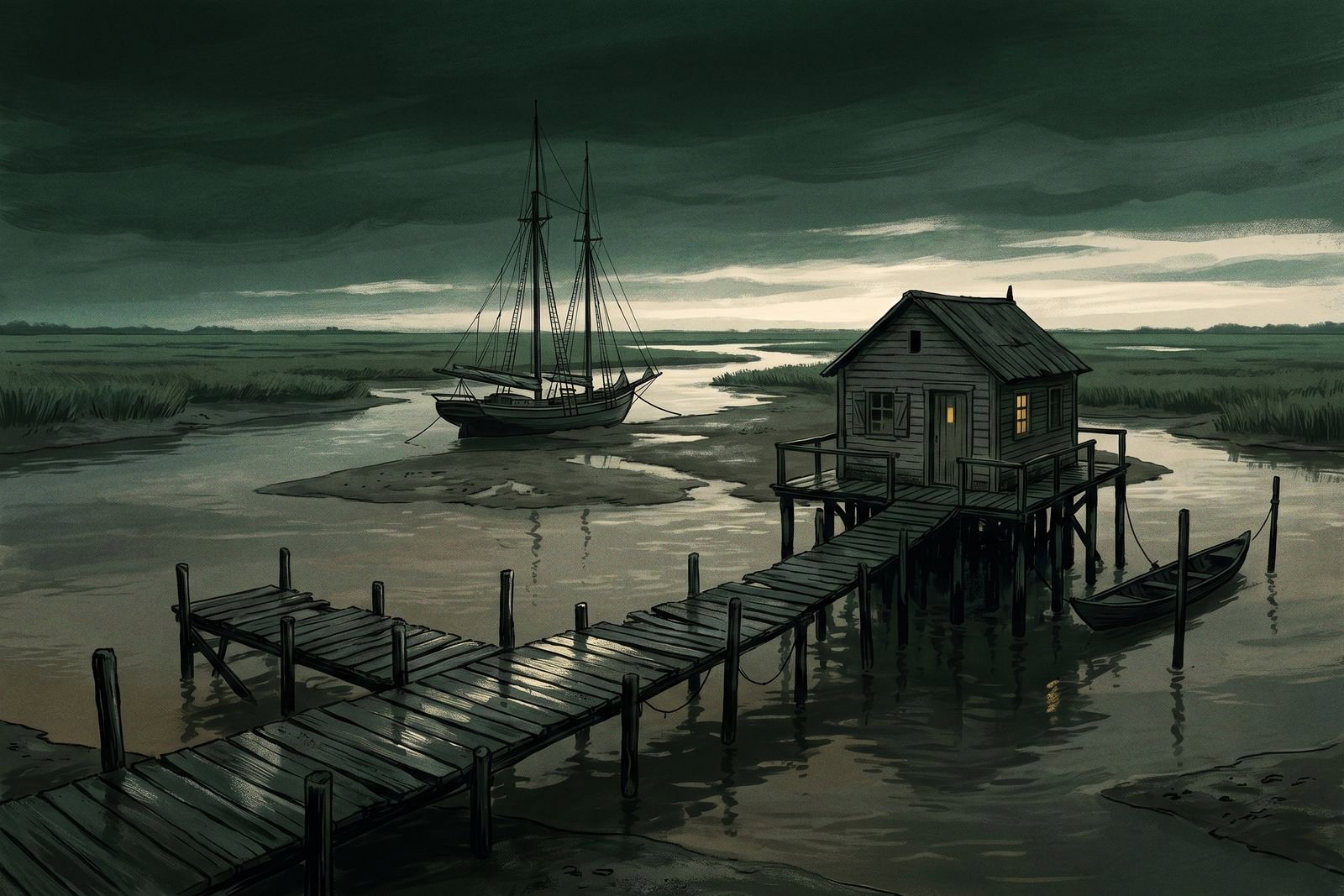
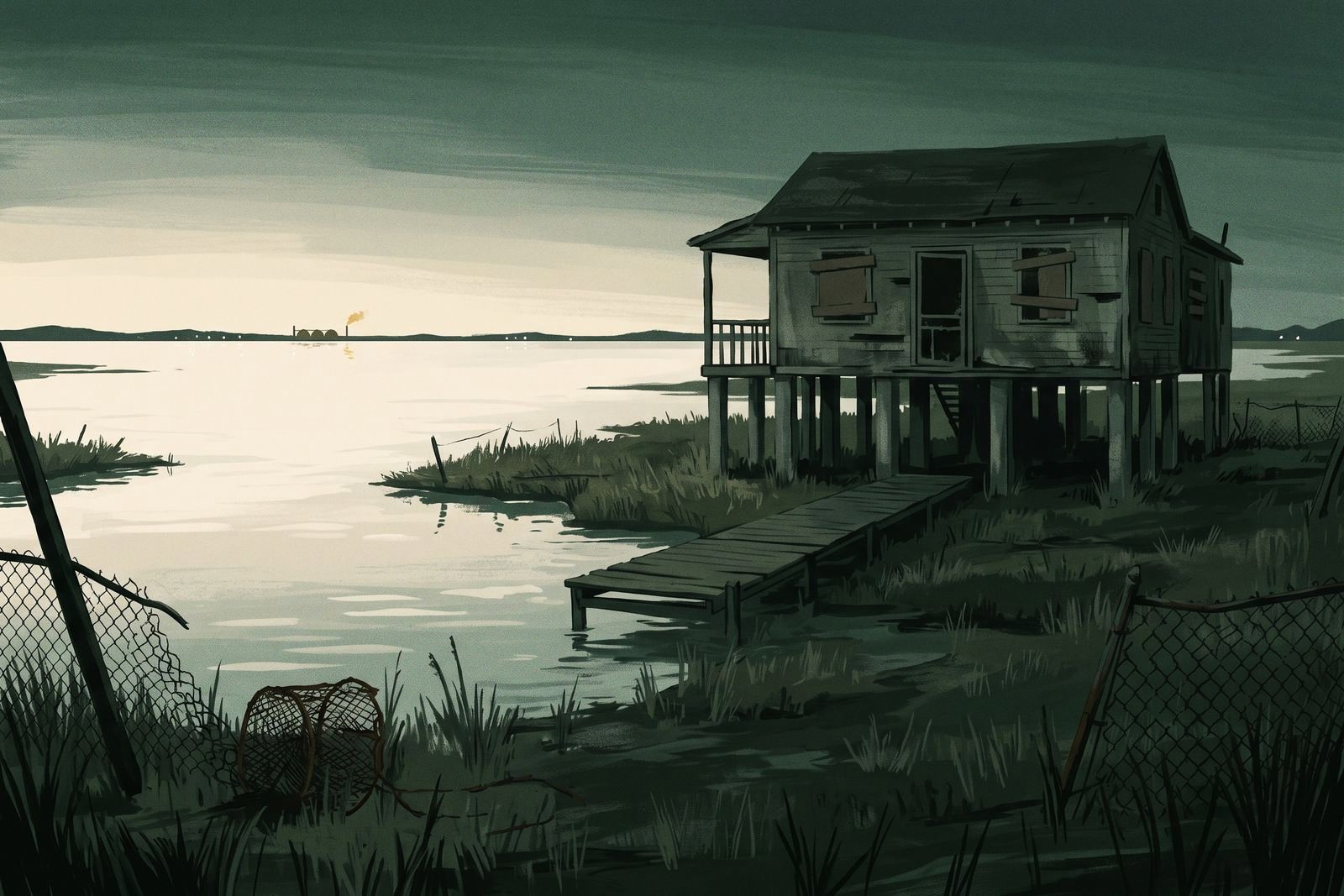
Laussat governs by decree because the mail takes eleven weeks when it comes at all. The Spanish companies stay on the Mexican silver until the situado stops in 1808; after that the colony lives on a transit duty of two and a half per cent levied at the Balize on American produce coming downriver, collected in a plank building on piles at the river's mouth, where the pilots keep the register and the mosquitoes keep everyone else away. His garrison arrives in 1804 and 1805 from Saint-Domingue: two black regiments under Christophe's officers, the only fever-acclimatised troops in the hemisphere, and the only ones who can stand a summer at the passes.
The English come for the passes in 1806. Marines burn the toll-house and rebuild it as a guard post, and Ovide, a bar pilot of thirty who had been collecting the duty, spends six years piloting for a flag he did not choose while his brother runs powder overland from Havana to the Creole and free-coloured irregulars in the cypress. The squadron holds the mouth and cannot hold the country. At the general peace the passes come back, traded against Malta and the sugar islands, and paid for with a most-favoured navigation article for British bottoms that will still be quoted in court in 1922. Left behind: a Protestant chapel, the Scots houses on Tchoupitoulas, and eleven years in which men learned to govern themselves without asking.
Meanwhile New Orleans reads Berthier's ultimatum of 1800 aloud again and takes what Spain can no longer hold: Mobile in 1810, Pensacola in 1812, against the Baton Rouge filibusters. When the Americans fight Britain from 1812 it is a war of the Lakes and the Chesapeake; there is no Chalmette, and General Jackson, refused permission to cross the Perdido, writes to Washington that the Gulf has been stolen. Nobody answers him. Everyone is busy.
1816–1845What France Could Not Keep at Home
At Attakapas in the spring of 1821 a half-pay captain of the 14th of the line signs for eighty arpents of prairie at a price a corporal could meet, and finds his neighbours are Alsatians from Wissembourg who speak no French he recognises. The Restoration is emptying itself into the delta: demi-solde officers, Bonapartists with no country, refractory congregations, Rhineland peasants shipped from Le Havre at the state's expense to be rid of them. To these are added the nine thousand from Saint-Domingue whom Cuba expelled in 1809, Irish Catholics from the 1830s, and, most consequentially, the Canadiens. Priests and land agents work the parishes of Lower Canada with a printed circular offering fee simple on the Red River, and the emigration that in another sequence went to the New England mills comes down the Mississippi instead. By 1850 there are perhaps a million francophones between the Balize and the Arkansas.
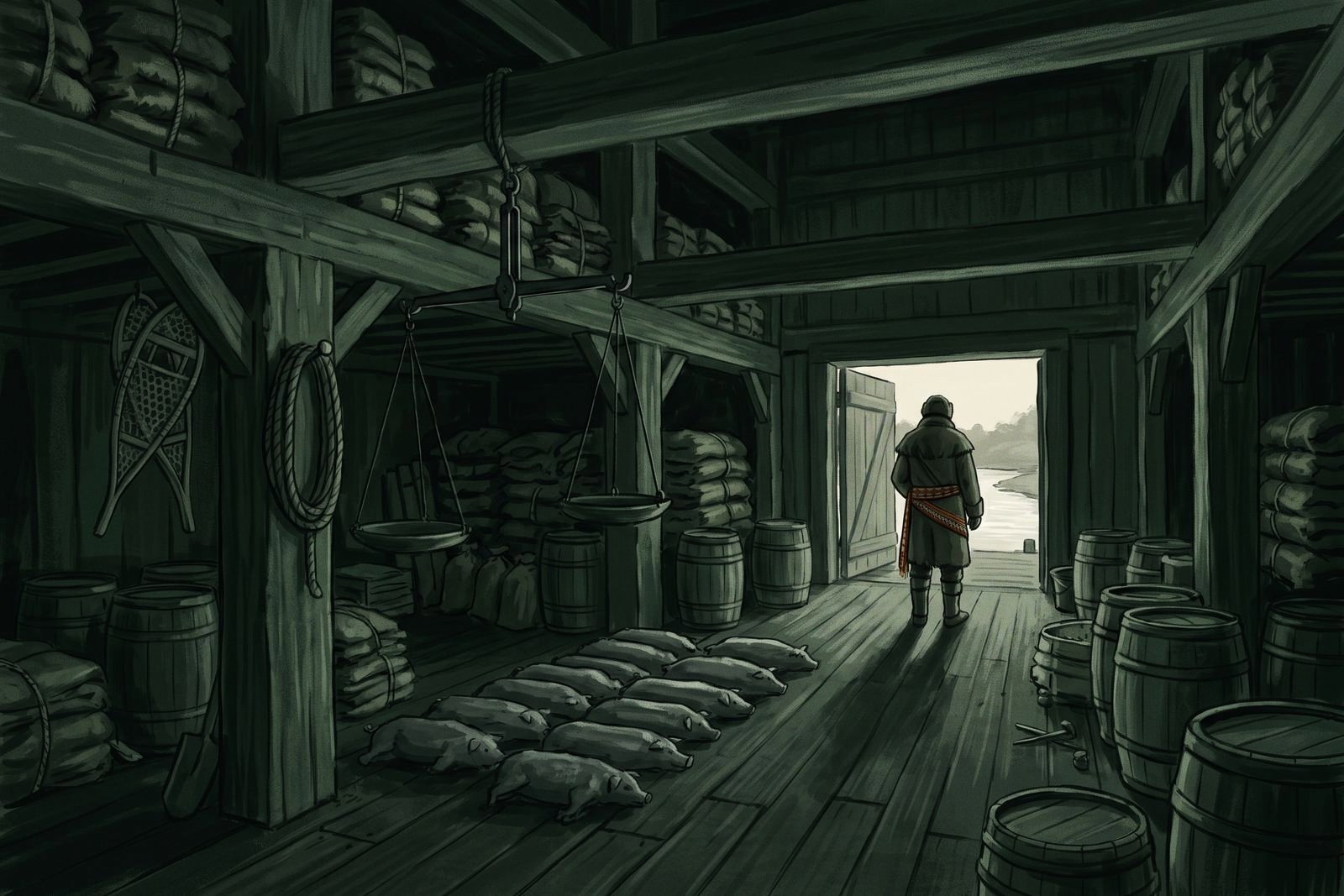
The capital that might have bought all this goes elsewhere. Baring and Hope, having lent against customs revenue rather than land, look for something to do with New York's ambitions, and from 1817 they take the Erie stock. The canal opens in 1825; by 1840 New York handles more tonnage than every Gulf port together, and American cotton, which must pay French duty at Mobile or go east overland, goes east. The Monroe message of 1823 names Russia and Spain and says nothing about the mouth of the Mississippi, which the Moniteur de la Louisiane, still printing four pages in French from Duclot's old shop, reprints with a satisfaction it does not bother to hide.
Above the Arkansas, France governs by charter because it cannot govern by garrison. Nobody in the Marine ever believed the Appalachians could be walled: three thousand men had been the whole plan. So a Compagnie du Missouri on the Hudson's Bay model farms the fur, the lead and the Ste Geneviève salt to the Chouteau houses of St Louis against a redevance and the cost of Indian presents, and a treaty of alliance makes the Osage a client barrier on the Arkansas, paid in powder, muskets, missions and commissions for métis officers. The Osage sell that alliance hard and know what they are selling: they take the guns and they take the smallpox, and their hunting range shrinks anyway as the Compagnie's licensed trappers move west.
Then Washington passes the Removal Act of 1830 and discovers a hole in the map. There is no Indian Territory to send anyone to, because everything beyond the river is French, Osage or claimed by both. The Choctaw and the Creek are driven off their lands regardless, into pine barrens and swamp east of the Mississippi, into reserves the states dissolve as fast as they are drawn; those who cross the river do so as refugees, and the Compagnie's agents at Arkansas Post sell them residence permits at four dollars a head. Thousands die in the crossings and the winters that follow, and the difference the divergence makes is bookkeeping: dispossession without a destination, which is worse and slower. The Cherokee, harder to move without a place to move them, are still litigating in 1845.
And in the lower parishes, slavery persists. The arrêté of 1802 saved the freedom of Saint-Domingue and touched nothing on the Mississippi; the sugar estates buy through Mobile and Havana and grow. Fortuné, an ironworker freed by coartación in 1796, dies in 1834 having bought two cousins out and hung the balcony rails of four houses on the rue Royale, in a city where free men of colour own workshops and cannot vote. In the winter of 1845 the Moniteur reprints, without comment, a Nashville paper's line that the American republic's river ends at a clerk's table in the mud.
1846–1852The Toll-House, the Decree and the Oath
Théodule, bar pilot at the Balize and Ovide's son, spends the summer of 1847 watching American steamers stand off the passes and count the batteries. Polk's war, begun the year before over the transit duty and the closed Missouri corridor, goes well in the north and nowhere here. American arms take St Louis and the lead country and hold the upper valley; the amphibious attempt on the passes in June 1847 loses eleven hundred men in three days to entrenched Antillean regiments and a bar that will not admit deep hulls. Mexico, left alone, keeps Alta California, and when gold is found at Sutter's mill in 1848 the ships that go round the Horn are chartered in New Orleans and San Francisco fills with people speaking Spanish. The Treaty of Natchez in 1849 gives the United States everything above the Missouri and the Platte, caps the Balize duty at two per cent by treaty, and leaves France the mouth of the continent's river.
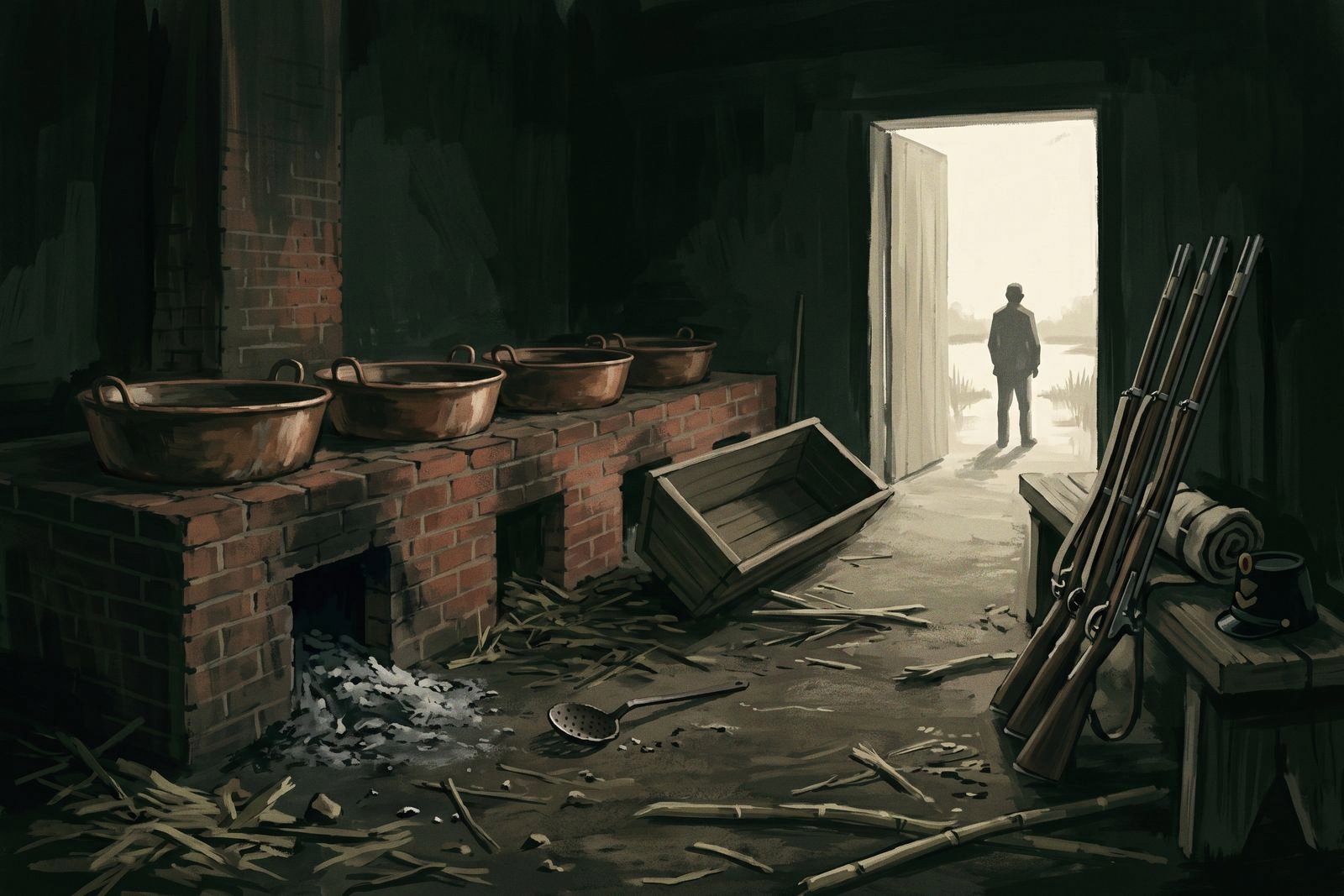
Between the war and the treaty, Paris makes a revolution and the Schoelcher decree frees some two hundred thousand people in Basse-Louisiane. The proclamation reaches the Balize in a mail packet and is nailed to the toll-house door, where Théodule reads it out three times to men who cannot read, while overseers upriver are already marching coffles west toward the Sabine and north toward American soil to sell them before the paper arrives. In the winter of 1848 the sugar parishes attempt a secession. It is put down in eleven weeks by the free-coloured militia of New Orleans and two black battalions from Martinique: Numa, grandson of Fortuné, ironworker, thirty-one, commands a company at Donaldsonville and afterward cannot be excluded from anything. Indemnity at Antillean rates would come to ninety-four million francs. It is never fully paid, which ruins the planters and makes the fortunes of the brokers who buy their paper at nineteen sous.
News of Louis-Napoléon's coup reaches the levee in January 1852. The colonial assembly, three years into an emancipation it enforced with its own guns, refuses the oath, declares itself the legitimate republic in America, and offers federation to the isles. Saint-Domingue and Guadeloupe accept within the year; Martinique quarrels for one and joins in 1853. Paris cannot cross an Atlantic it does not control and settles in 1855 for a commercial treaty. The Moniteur sets the declaration in the largest type it owns and misspells "fédération" in the second column.
The republic seats men of colour fifteen years before the Fourteenth Amendment, and in 1853 its ministry of marine licenses the first cargo of engagés à temps from the Loango coast.
1853–1900Free Soil and the Five-Year Contract
At Algiers point on a March morning in 1856, one hundred and ninety men and women come off a barque under a fiction: each has been redeemed from an African master and has freely contracted for five years in the cane at eight piastres a month, less passage. Nineteen died at sea. The Federation, which denounces the auction blocks of Natchez in every session, imports some forty thousand engagés between 1853 and 1868, from the Loango coast, from Zanzibar, from the Antilles, and renews their contracts by magistrate's order when they expire. It ends under British naval pressure and a revolt of the Saint-Dominguan deputies, who know exactly what they are looking at, and the men who ran it die respectable in houses on the Esplanade.
The class that made the republic makes a hierarchy out of it. The old artisan families, freed by coartación before 1803, hold the militia pensions, the notarial offices and the property qualification, and they use them: Haitians who come for work are told the packets are full, Sicilians in the market are policed by a licence system, and the Black Americans who cross the river every week after 1858 are settled back of town and registered separately for thirty years. The assembly's argument is never colour; it is always tenure, papers and the militia rolls of 1849, which is what makes it durable.
The American rupture comes early and hard. Free soil a few hundred yards west, self-purchase deeds filed before Federation courts, and no Louisiana pair in the Senate to hold the balance: the cotton states secede in 1858 over an extradition demand the Federation refuses. The war is shorter than ours and more desperate, ending in 1866; the Federation blockades alongside the Union and is paid at the peace in a Sabine boundary settlement, a coaling station and a tariff union, having asked for Texas and been told, politely, what great powers actually give.
Prussia beats France in 1871, which changes nothing on the river and everything in the drawing rooms, where the pro-French party discovers it is a party of sentiment. The school law of 1874 makes French the language of instruction and tolerates Kouri-Vini in the yard; Rosalie, Numa's daughter, teaches forty children at Sainte-Croix and strikes their hands for speaking it, then buys the 1884 novels that put it in print. With no coal in the delta the country lives by carrying, insuring and refining other people's goods, importing Welsh coal at the wharf. Yellow fever takes four thousand in 1878. In 1898 the Federation takes the Cuban and Puerto Rican security guarantee out of Spain's collapse, and in the same decade re-floats the Panama concession from an office on Carondelet, which will be a scandal in the assembly for eighty years.
In 1901 a drilling contractor near Jennings, hired to find water for rice, is told to stop at a thousand feet.
1901–1928Oil, Neutrality and the River
He does not stop. The Jennings well comes in that September, Caddo follows in 1905, and the bunkering trade at the New Orleans wharves begins to smell of oil instead of Cardiff. The same years bring the mosquito work that ends the epidemics, so that everyone over fifty has had the fever and no one under thirty will.
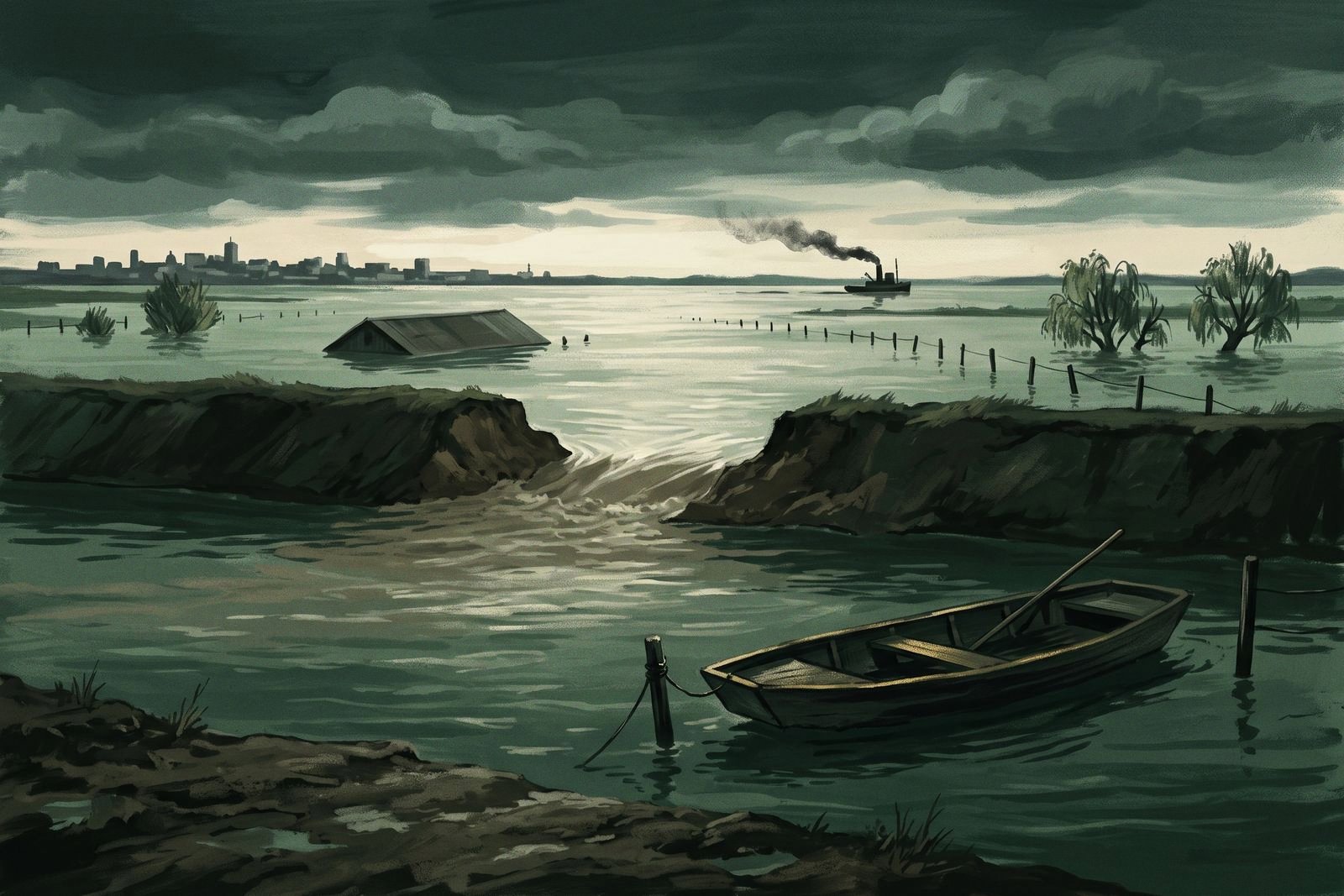
The great flood of 1912 takes the toll-house at the Balize for the third time, and it is rebuilt for the third time on higher piles, with a gauge board that Placide, Théodule's grandson, reads at seven and at four and telegraphs to the levee board. When Europe goes to war in 1914 the Federation stays formally neutral and carries everything: four hundred and eleven ships lost to submarines, forty thousand volunteers gone to France, and every family in the sugar parishes with a man buried in Champagne who went because he wanted to. There is no American army in France, because a United States facing the Atlantic and in commercial rivalry with a creole carrying fleet finds no constituency for one. So the war ends in 1919 by exhaustion: Brest-Litovsk stands, Alsace-Lorraine is partitioned, there is no guilt clause and no reparations, and New Orleans emerges creditor to Paris and to London both. From 1920 it is also the wet port two days downriver from a dry republic, which pays for a great many police pensions.
Then, in April 1927, the river. Same rainfall, same levees-only doctrine, same crevasses. What differs is the signature: the charge fired below Poydras to save the city drowns St Bernard and Plaquemines on the order of a sovereign ministry answerable to the drowned, and in September the assembly votes it out. The Commission fédérale du Fleuve is chartered in 1928 with a compensation fund written into statute and an obligation no colony could have carried: because everything above the Missouri and the Platte has been American since Natchez, it must negotiate spillway operation and gauge readings with Washington as an equal.
On Tchoupitoulas the discount clerks are still carrying French and British war bonds at something near par.
1929–1961The Metropole in the Anteroom
They stop in 1932. The New York cycle breaks on time, because nothing in this history touched American credit; central Europe's collapse in 1931 is milder, there being no reparations spiral and no inflation of 1923 to have destroyed the creditor class. The blow arrives from the other side. Paris and London suspend service on the war debt, the paper the Tchoupitoulas houses discounted becomes wallpaper, and tonnage lies idle at Mobile for four years. The piastre louisianaise, silver-derived since the 1820s, goes to a dollar peg in 1933; the pro-French party calls it surrender and the commercial houses call it arithmetic, and both are re-elected.
Germany's authoritarian regime, having no lost war to avenge in the west, goes east instead, and from 1938 fights the Soviet Union for Ukraine and the Baltic with Poland as its client. This is not a gentler century. The eastern war kills by famine, deportation and reprisal on a scale the Federation's consuls report in detail from Riga and Lemberg, and Jewish communities across the German-client east live under expulsion orders, ghetto decrees and pogroms that the assembly debates twice and answers with a visa quota of six hundred a year. There is no industrial extermination in this sequence. There is a long conquest that starves and shoots, and a republic on the Gulf that had ships and did not send them, and the two facts sit in the same archive.
In 1938 the Federation takes a compulsory third of the oil concessions through the Régie fédérale des pétroles and sells crude to every belligerent. Germany turns west in 1941 to close the Atlantic; Paris falls in June, and the French government-in-exile, its gold and de Gaulle's treasury come to rooms on the rue Royale, so that the metropole spends four years as guest of the republic that refused its oath in 1852, in anterooms where the clerks speak Kouri-Vini. Neutrality ends in 1942 when Japan strikes the Pacific. The Federation conscripts for the first time since the planters' secession, escorts convoys, and loses a generation of pilots. There is no bomb in time; the Pacific war ends in 1946 after blockade, mining and firestorms over Japanese cities that Federation convoy crews watch from the sea, and the first device is tested in 1948 into a world already triangular, Germany, the Soviets and a Franco-British west, with Washington content to be hemispheric.
Decolonisation then runs inward. France loses Indochina by 1954 and Algeria by 1962, and Catholic Vietnamese and pied-noir francophones come to the delta by the shipload. But the Antillean and Saint-Dominguan deputies have said since 1900 that the sugar quota is written in New Orleans for New Orleans, and after the constitutional crisis of 1959 over quota and over which language the island schools teach, Saint-Domingue leaves by referendum in 1961, taking a third of the Federation's people with it.
The benches empty. The offshore leases, let since 1948, are suddenly the only thing anyone wants to talk about.
1962–2026The Fund, the Retreat and the Word on the Note
In a schoolroom at Golden Meadow in October 1965, an old woman votes in the only referendum of its kind on earth: four per cent of oil revenue, every year, to levees and pumping, for as long as the oil lasts. It passes with sixty-one per cent, and it is why the delta's flood defence in the 1990s is a generation ahead of its neighbours' and its debt service is too. The royalties themselves go to the Fonds du Domaine, chartered in 1962, the Régie having taken half the concessions in 1956. When the dollar breaks in 1971 the piastre floats rather than follows, and every American devaluation becomes a New Orleans election issue.
With no coal and little manufacturing, the country sells what it has always sold: neutrality, paperwork and the sea. The ship registry becomes the second largest on earth, flying on hulls that never come here; the offshore banks manage American, Mexican and Brazilian money until the Treasury pressures of 1989, 2001 and 2009 force disclosure treaties that the assembly ratifies each time by four or five votes. The digital age arrives sideways: a United States that only consolidated its Pacific coast in the 1880s clusters its technology in the northeastern corridor, and the Federation gets the cable landfalls, the arbitration courts and the cheap Gulf power that cools other people's servers.
Ouragan Angélique comes ashore in September 2018. The levees mostly hold. The coast does not, because it has been subsiding and salting for a hundred years, cut through by the Régie's own canals, and there is no foreign power to blame for either. The Plan de Retrait ordonné, voted in 2021 and running to 2040, buys out and relocates seventy-one bayou communities, several of them named in grants of the 1720s. Placide's granddaughter took the cheque for the house at Leeville and moved to Thibodaux, and says so without bitterness twice a year, at Toussaint and at Carnival.
In the assembly this spring the retreat schedule competes for floor time with the bill making Kouri-Vini fully co-official, opposed by the party of the old artisan families, whose deputy for the Sixth is a great-great-granddaughter of Fortuné's line and who is asked about that in every interview. The five-piastre note has carried the assembly of 1852 on the face since 1957 and, since 2003, its denomination in Kouri-Vini on the reverse, which is the concession that made the bill inevitable.
Out at the pilot station this morning, in the room where the day book is kept, the coastal survey chart is pinned above the coffee machine. The passes are marked, the LNG berths are marked, the anchorage is marked. Where the toll-house stood, whose two and a half per cent on American flatboats paid for eleven years of accidental self-government and everything that came of it, there is water, and one word in italics: submergée, position approximative.
1802Bonaparte refuses to extend the Guadeloupe decree to Saint-Domingue
Reading Leclerc's despatches on fever mortality, the First Consul declines to repeat Richepanse's May 1802 measure across the Windward Passage. An arrêté confirms the abolition of 1794 in Saint-Domingue and ratifies Louverture's 1801 constitution as an imperial statute. Louverture, already seized, is still deported to France; Christophe and Dessalines, who had submitted to Leclerc, are confirmed in rank with land. The news that turned the colony's black and coloured officers against France in our sequence is never sent.
3 SOURCED CAUSES
1802Leclerc dies of fever; the army is reduced rather than reinforced
Yellow fever kills Leclerc in November 1802 and tens of thousands of Europeans regardless. But with no general insurrection there is no wet-season campaign: garrisons are drawn down to the ports, French losses stop near fifteen thousand, and no battle of Vertières is fought. The cost is written in the ledgers: sugar output settles near a third of 1789, cultivators will not return to gang labour, and the Bordeaux and Nantes armateurs and the Antillean planter lobby around Joséphine turn openly against the First Consul.
4 SOURCED CAUSES
1803France sells the east bank, not the colony: the Treaty of Paris of 1803
With the Antilles held, Bonaparte refuses Barbé-Marbois's liquidation but concedes the naval argument by buying the Americans rather than fighting them. Livingston and Monroe get exactly what Jefferson authorised: the east bank of the Mississippi, perpetual free navigation, and a right of deposit at New Orleans written into treaty, for two million dollars. The city stays French. The Senate ratifies in November by a much narrower margin than 24 to 7; the Kentucky and Tennessee members vote no, having wanted the port itself.
7 SOURCED CAUSES
1803Louisiana is mortgaged in London and Amsterdam; Victor never sails
France gets one-seventh of the cash it would have had from a sale and covers the gap by pledging revenue instead of soil: Baring & Co. and Hope & Co. advance some forty million francs against the customs of New Orleans and the Cap at a punitive discount, powers of attorney running from May. Britain declares war on 18 May; General Victor's three thousand men rot at Flushing and are broken up in the autumn. A colony financed in London acquires a British commercial party in its cabildo within a year.
6 SOURCED CAUSES
1803The eleven-year mail famine: Laussat governs by decree and by Balize duty
Spain hands over at the Cabildo on schedule; Laussat, prefect without metropolitan troops, governs with the Creole notables who had petitioned for reunion, keeping the Spanish companies on the Mexican situado until the silver stops in 1808. He then funds the colony on the only revenue available: a transit duty of two and a half per cent at the Balize on American downriver produce, worth a few hundred thousand dollars a year by 1815. His garrison arrives in 1804-05 from Saint-Domingue — two black regiments under Christophe's officers, the only fever-acclimatised troops in the hemisphere.
6 SOURCED CAUSES
1806The Jamaica squadron takes the passes and cannot take the country
A British expedition from Jamaica seizes the Balize and the river mouths in 1806-07 and holds them six years, but is starved out of the interior by Creole and free-coloured irregulars supplied overland from Havana and by the Antillean regiments. The passes come back at the general peace, traded against Malta and the sugar islands, and only with a most-favoured navigation article for British bottoms. Left behind: a Scots and Liverpool merchant stratum in the city, a Protestant chapel, and eleven years of self-government that no ministry can now revoke.
4 SOURCED CAUSES
1810The Floridas taken on the claim of 1800; the Gulf closes to American cotton
Reviving Berthier's September 1800 ultimatum, which had demanded East and West Florida with Louisiana, New Orleans occupies Mobile in 1810 and Pensacola in 1812 against the Baton Rouge filibusters as Spanish authority collapses. The Gulf coast west of the Apalachicola is French at the 1815 settlement. The consequence outlives the war: American cotton has no outlet of its own on the Gulf and pays French duty at Mobile or goes east overland, and the capital that in our sequence bought Louisiana turns instead to the Erie works and the Atlantic ports.
3 SOURCED CAUSES
1816France dumps its embarrassments on the delta; the colony is peopled by exile
The Restoration ships out what it cannot keep at home: demi-solde officers and Bonapartist émigrés in tens of thousands, refractory congregations, Alsatian and Rhineland peasants. To them are added the nine thousand Saint-Domingue refugees expelled from Cuba in 1809 and, from the 1830s, Irish Catholics. A land law offering cheap fee simple on the Red River and the Attakapas prairies, worked by clergy and land agents in Lower Canada, turns the Canadien emigration southward down the river instead of north-east to the New England mills. Perhaps a million francophones by 1850.
3 SOURCED CAUSES
1817The interior held by charter and alliance, never by garrison
France never garrisons the plains and never sells them. A chartered Compagnie du Missouri on the Hudson's Bay model farms the fur trade, the Missouri lead and the Ste Geneviève salt to the Chouteau houses of St Louis against a redevance to New Orleans and the cost of Indian presents. A treaty of alliance makes the Osage a client barrier polity on the Arkansas — powder, muskets, Catholic missions, métis officer families — with the Caddo and Quapaw attached and arms flowing to the Comanche. The title above the Arkansas remains paper, squatted from the 1830s.
3 SOURCED CAUSES
1846The American War of the Mississippi: the upper valley lost, the delta held
Denied a Pacific corridor through the Missouri country and enraged by the Balize duty, the Polk administration turns on the river. American arms win in the upper valley; a fortified delta supplied from Havana and the Cap, garrisoned by Antillean regiments, cannot be taken, and an amphibious attempt on the passes fails with heavy loss. The Treaty of Natchez of 1849 gives the United States everything above the Missouri and the Platte, caps the transit duty by treaty, and leaves France holding the mouth of the continent's river.
3 SOURCED CAUSES
1848Emancipation as a garrison operation
The Schoelcher decree frees some two hundred thousand people in Basse-Louisiane. Estates and coffles run west and north ahead of it; the sugar parishes attempt a planter secession in the winter of 1848-49 and are put down by the free-coloured militia and the black Antillean battalions. Indemnity at Antillean rates would come to ninety-four million francs and is never fully paid, which ruins the sugar houses and enriches the New Orleans brokers who buy their paper. The men who suppressed the secession are afterwards impossible to exclude from the assembly.
3 SOURCED CAUSES
1851The assembly refuses the coup and declares the Fédération française d'Amérique
News of Louis-Napoléon's coup reaches New Orleans in January. The colonial assembly, sitting on the emancipation it had just enforced, refuses the oath, declares itself the legitimate republic in America, and offers federation to Saint-Domingue and the isles; Saint-Domingue and Guadeloupe accept, Martinique after a year's quarrel. Paris cannot reconquer across an Atlantic it does not control and settles for a commercial treaty in 1855. The new republic seats descendants of the coartación freedmen in its chambers fifteen years before the Fourteenth Amendment.
4 SOURCED CAUSES
1857The American rupture, earlier and shorter, across a river frontier
With free soil a few hundred yards west and no Louisiana pair in the Senate since the 1810s, the fugitive corridor becomes a paperwork one, self-purchase deeds filed before Federation courts. The cotton states, landlocked from the Gulf and bleeding labour, secede in 1858 over the extradition demand and the Federation's refusal. The war is shorter and more desperate: the Federation closes the Gulf and blockades alongside the Union, is paid at the peace in a Sabine boundary settlement, a coaling station and a tariff union, and receives a Black emigration westward across the river that never stops.
4 SOURCED CAUSES
1870A language legislated, an entrepôt enriched, a Caribbean guarantee taken
The school law of 1874 makes French the language of instruction and tolerates Kouri-Vini, which an 1880s literary generation standardises in print; Ursuline and Sainte-Croix orders and Canadien brothers staff the schools, and the Moniteur de la Louisiane, founded 1794, still prints. With no coal in the delta the Federation lives by shipping, refining, insurance and finance, importing Welsh and American coal — until the strikes at Jennings in 1901 and Caddo in 1905. In 1898 it takes the Cuban and Puerto Rican security guarantee, and re-floats the Panama concession from New Orleans.
3 SOURCED CAUSES
1914The great neutral carrier; a European war ended by exhaustion
The Federation stays formally neutral and carries everyone's cargo, losing over four hundred ships to the U-boats and sending forty thousand volunteers to France. The United States, Atlantic-facing, never annexed to the Gulf and in commercial rivalry with the creole carrying fleet, finds no 1917 constituency for intervention. Without an American army the war ends in negotiated exhaustion in 1919: Brest-Litovsk stands in the east, Alsace-Lorraine is partitioned, there is no guilt clause and no reparations of the imagined scale. New Orleans emerges creditor to both Paris and London.
2 SOURCED CAUSES
1927The Poydras crevasse brings down a ministry
The flood itself is unchanged: same rainfall, same levees-only doctrine, same river. What differs is who signs the order. The dynamite below Poydras is fired by a sovereign ministry answerable to the drowned parishes of St Bernard and Plaquemines, not by a prefect answerable to Paris, and the assembly votes it out in September. The Commission fédérale du Fleuve is chartered in 1928 with a compensation fund written into statute, and — because everything above the Missouri and Platte has been American since Natchez in 1849 — it must negotiate spillways and gauge readings with Washington as an equal, the first standing Federation-United States technical body.
2 SOURCED CAUSES
1929The crash is unchanged; the war debts default and the piastre leaves silver
The New York speculative cycle runs as ours — nothing in this divergence touched American credit — and the crash comes on time. Central Europe's 1931 banking collapse is milder: no Versailles guilt clause, no reparations spiral, no 1923-scale German inflation to have destroyed the creditor class. The Federation is hurt from the other side. Paris and London, owing New Orleans since 1919, suspend service in 1932 and wipe out the paper the Tchoupitoulas houses had discounted; carrying trade tonnage lies idle at Mobile. The piastre louisianaise, silver-derived since the 1820s, goes to a dollar peg in 1933, which the pro-French party calls a surrender and the commercial houses call arithmetic.
2 SOURCED CAUSES
1938The second European war happens, in the east, on other terms
Not averted, not on our timetable. The 1919 exhaustion peace left Brest-Litovsk standing and no reparations to power a revanchist revolution, so Germany's authoritarian-nationalist regime is expansionist eastward rather than revisionist westward: with Poland as client it fights the Soviet Union for Ukraine and the Baltic from 1938, and Britain and France conduct a naval and colonial war only until 1941. The Federation is again the neutral carrier, now selling Jennings and Caddo crude to every belligerent, and in 1938 takes a compulsory one-third state share in the concessions through the Régie fédérale des pétroles — sovereign leverage no colony could have exercised.
2 SOURCED CAUSES
1941Paris falls; Free France banks on the rue Royale; the Federation goes to war in the Pacific
Germany turns west in 1941 to close the Atlantic blockade and occupies Paris in June. The French government-in-exile, its gold and de Gaulle's treasury sit at New Orleans rather than London — a republic sovereign for eighty-nine years hosting the metropole it seceded from in 1852, with Kouri-Vini spoken in the anterooms. Neutrality ends in 1942 when Japan strikes the Pacific: the Federation fights alongside the United States for Gulf oil, Caribbean bases and convoy escort, conscripting for the first time since 1849. No departementalisation is offered and none could be accepted; the 1945 settlement finds the Federation a founding member of the United Nations.
3 SOURCED CAUSES
1946Decolonisation runs inward: Saint-Domingue leaves the Federation
The global anchor holds — Asian and African decolonisation proceeds, France losing Indochina by 1954 and Algeria by 1962, sending Catholic Vietnamese and pied-noir francophones to the delta. Inside the Federation the same logic bites: the Antillean and Saint-Dominguan deputies have complained since 1900 that the sugar quota is written in New Orleans for New Orleans. After the constitutional crisis of 1959-61 over quota and over French versus Creole in the schools, Saint-Domingue secedes by referendum in 1961, taking a third of the federation's people. Guadeloupe, Martinique and the Cuban and Puerto Rican guarantees remain. The Cold War never becomes a two-power duel: Europe is triangular, Germany, the Soviets and a Franco-British west, and Washington stays hemispheric.
2 SOURCED CAUSES
1948Oil pays for the levees the voters chose, and the piastre floats
Offshore leases from 1948, the Régie's share raised to half in 1956, and a Fonds du Domaine established in 1962 to hold the royalties. The 1965 referendum on levee standard — the only such vote in the world — commits four per cent of revenue annually to works and pumping, which is why the delta's 1990s flood defence is a generation ahead of its neighbours' and why its debt is too. When the dollar breaks in 1971 the piastre floats rather than follows, and Washington's devaluations become domestic political events in New Orleans. Immigration reverses again: Black Americans still crossing the Sabine, Haitians resented, Sicilians long since assimilated, Vietnamese Catholics after 1955.
2 SOURCED CAUSES
1985Registry, secrecy and containers: the entrepôt meets the digital age
With no coal and little manufacturing, the Federation had always sold neutrality, insurance and paperwork; containerisation and then data make that trade enormous. The New Orleans ship registry becomes the second largest on earth, the offshore banks manage American, Mexican and Brazilian money, and successive United States Treasury pressures — 1989, 2001, 2009 — force disclosure treaties the assembly ratifies narrowly each time. The digital anchor is met from the side: a United States that reached the Pacific only in the 1880s clusters its technology industry in the northeastern corridor, and the Federation's role is cable landfall, arbitration law and cheap Gulf power rather than invention.
2 SOURCED CAUSES
2018Ouragan Angélique, the managed retreat, and the language bill
A 2005-class storm strikes in September 2018. The levees mostly hold; the coast does not, because it has been subsiding and salting for a century. The response is a national one, paid from the Fonds du Domaine, and so is the blame: no foreign power to curse, only the Régie's canals and the Commission's own maps. The Plan de Retrait ordonné, voted 2021 and running to 2040, buys out and relocates seventy-one bayou communities, several of them named in grants of the 1720s. In the assembly this year the retreat competes for time with the bill to make Kouri-Vini fully co-official — opposed, awkwardly, by the pro-French party of the coloured bourgeoisie.
3 SOURCED CAUSES
Every one of these worlds was weighed against the one you have just read. Here is where each of them breaks.
France refuses the sale in 1803, loses Saint-Domingue to the Haitian revolution anyway, sells the country above the Arkansas to the United States in 1836, turns the delta into a French department in 1946 and adopts the euro in 2002.
We weighed this first, because it is the tidiest way to keep Louisiana French and still arrive at a map we recognise. It breaks in the 1830s, at the money. Louisiana was sellable in 1803 only because a war was starting and the treasury had no cash; Louis-Philippe's France was solvent, was funding the conquest of Algeria at greater cost and far greater distance, and settled the American spoliation quarrel in those same years by paying twenty-five million francs rather than parting with an acre. A cession in 1836 therefore restores our real frontier without any force to explain it, and once it is restored everything downstream follows our own calendar: civil war on time, both European wars on time, the flood of 2005 with its nine hundred dead. It was defensible history and we could have written it honestly. We took the other road because it is a larger world, and this one owed a larger world.
Leclerc's army breaks Louverture's generals, slavery is restored in Saint-Domingue, and Bonaparte keeps both the richest sugar colony in the world and a Louisiana granary to provision it.
This is the version Bonaparte himself wanted, and we weighed it because the order restoring slavery was written and only ever needed a signature. It fails in 1802 and 1803, and it fails to yellow fever rather than to any general. Battalions landed at full strength in February were mustering a third of their numbers by July, Leclerc was dead by November, and after Britain declared war on 18 May 1803 no reinforcement of any size crossed the Atlantic. What we kept is the political half of the road: abolition confirmed instead of revoked, Christophe and Dessalines confirmed in rank and land, the colony held by agreement. The price is paid in the same year, when the Nantes and Bordeaux armateurs find they have fitted out for a trade that will not return and the crop settles near a third of what 1789 produced.
Britain, having seized the passes of the Mississippi in 1806, never gives them back, and New Orleans becomes an English-speaking Crown colony and, in our own century, a Commonwealth city-state on the Gulf.
On causes alone this road is sound, and we said so while setting it aside: the mouth of the continent's river is exactly the kind of node Britain kept when she took it, in the class of Malta, and a French colony that cannot defend its own bar has no argument against a squadron from Jamaica. We declined it as a matter of what the history is for. An English-speaking New Orleans inside an Anglo-American world is a smaller departure from our own than a francophone federation on the Gulf, and the smaller departure was not worth eleven episodes of consequence. What survived is the occupation itself, six years of it, and the bill for its ending: the passes come back at the general peace only in trade against Malta and the sugar islands, and only with a most-favoured navigation article for British bottoms that outlives the century. The Scots and Liverpool houses on Tchoupitoulas Street, and the Protestant chapel, are what the road left behind when we closed it.
France uses Louisiana to bottle the United States permanently east of the Appalachians, holding the mountain line as a hard frontier.
We weighed a sealed continent because it is the most dramatic use anyone could make of a French Mississippi. It breaks between the 1810s and the 1830s, and what breaks it is arithmetic of people. The Ohio valley was filling at a rate no French colony could match from a metropole that never sent settlers in numbers, and the whole force ever assembled for possession was General Victor's three thousand men at Flushing, who in this telling do not even sail. A wall requires garrisons France cannot raise, pay or acclimatise. What we built instead is the version the ground allows: a contested trans-Mississippi held by charter companies, client alliances and a transit duty, and a war in the 1840s that France loses above the Missouri and survives below it.
Louisiana declares itself independent in the 1810s or 1820s, alongside the Spanish-American republics, and takes its place early as a creole state on the Gulf.
The timing is attractive, since the whole hemisphere is coming loose in those years and the colony is already being governed by decree from a print shop. It fails in the 1820s on two counts that no amount of will corrects: there are not enough people, and there is no fleet. A republic proclaimed then has neither an army of its own nor a navy to keep the passes, and is bought or occupied within a decade by the United States or by Britain, whichever moves first. We deferred the same act to 1852, when the population exists, when a coup in Paris has stripped the metropole of any claim to legitimacy, and when emancipation has already produced a political class with property, rank and something to lose. Independence that survives needs a constituency, and in the 1820s there is none.
The Federation takes Texas to the Nueces from a grateful United States as payment for closing the Gulf and blockading beside the Union.
We weighed it because the service rendered is real and the Federation's price at the peace is a fair question. It breaks in the 1860s on what victorious great powers actually do. A United States that has just spent four years destroying a secession does not settle a debt of gratitude in continental territory, least of all territory adjoining a foreign republic that is draining labour across its river. We cut the claim down to what Washington could concede without argument at home: a Sabine boundary settlement, a coaling station on the Florida strait, and a tariff union. That is the whole of the reward, and the Black emigration westward that begins in the same decade is worth more to the Federation than the Nueces would have been.
The wars of 1914 and 1939 arrive on our calendar with our coalitions, an American army in France in 1917, and Versailles with its guilt clause and its reparations.
Keeping the familiar wars is the strongest temptation in a history that runs to 2026, and we weighed it seriously before refusing. It fails at the 1917 hinge, and it fails for want of a cause. A United States that never took the Gulf, never acquired a Caribbean hegemony and spends the nineteenth century in commercial rivalry with a creole carrying fleet has no constituency for sending two million men to France, and without them the western front ends in negotiated exhaustion in 1919. No Versailles means no reparations spiral, no 1923 inflation, and a milder Central European collapse in 1931. The second war that follows is not ours: it faces east, and the catastrophe it produces is famine, deportation and massacre across the lands where most of Europe's Jews live, counted in millions all the same.
Napoleon, or failing him Joseph, ends his life not on Saint Helena but in New Orleans, an exiled emperor at the mouth of a French river.
We weighed it and it dies in 1815, in the week after Waterloo, on a point of custody. Britain held the disposal of his person and chose Saint Helena precisely for its distance from anything French; a Gulf colony with a friendly garrison and a printing press is the last address the Admiralty would have allowed. Nothing in the road survives as a turning point. It survives as population: the demi-solde officers and Bonapartist proscrits go down the Mississippi by the tens of thousands anyway, and the Champ d'Asile men, who in our world starved on the Trinity River, here have a flag to sail to and land law they can read.
Bonaparte sells the whole of Louisiana to Britain in 1803 rather than to the United States, and the Union never crosses the Mississippi at all.
We weighed it because the buyer with money in 1803 was London, not Washington. It breaks in the same season it opens. Britain does not pay sixty million francs for a coast her navy expects to close by blockade within the year, and Bonaparte, four days from a war he already sees coming, does not hand his enemy a granary and take payment in a currency that funds the fleet blockading him. Beyond the arithmetic, the sale ends the French-speaking Gulf before it begins, which is the one thing this history exists to follow. We kept only the shadow of it: the London and Amsterdam houses that lend against the customs of New Orleans get their agents into the cabildo anyway, without buying the country.
Everything before the hinge rests on these readings. Under each title, the passage retained.
- Louisiana Purchase Treaty (1803) | National Archives
the United States purchased 828,000 square miles of land west of the Mississippi River for $15 million
- Jefferson Buys Louisiana Territory, and the Nation Moves Westward | National Archives, Prologue (Spring 2003)
For four days at the end of April 1803, the Americans and the French worked out an agreement
- Louisiana Purchase, Summary, Facts, Significance, Treaty, 1803 | American History Central
The treaty was ratified by the United States Senate on October 20, 1803, by a vote of 24-7.
- San Ildefonso, Third Treaty of | Mississippi Encyclopedia
a final agreement of retrocession signed by Carlos IV, king of Spain, on 15 October 1802
- Treaty of San Ildefonso | EBSCO Research Starters
The Treaty of San Ildefonso, signed on October 1, 1800
- The Louisiana Purchase — Museum Gazette, National Park Service
made public the intention of Spain to revoke the right of deposit at New Orleans
- Louisiana: European Explorations and the Louisiana Purchase | Library of Congress
Spanish Intendant Juan Ventura Morales closed the port of New Orleans to American trade
- Louisiana Purchase — Encyclopedia Virginia
the Treaty of San Lorenzo, opening the Mississippi River to American trade and establishing a right of deposit
- The 1802 Expedition to Saint-Domingue (Haiti) and the Louisiana Purchase | BnF, Patrimoines Partagés
involved about 40,000 sailors and soldiers
- Saint-Domingue Revolution — 64 Parishes
eighty-six warships carrying twenty-two thousand troops
- 'The Leclerc Expedition' by Charles Forsdick — A Island Luminous (FIU)
Leclerc died of yellow fever in November 1802
- April 10, 1803 — Discover Lewis & Clark
It is not only New Orleans that I will cede; it is the whole colony
- The Louisiana Purchase | Council on Foreign Relations
British naval forces would likely seize both Saint Domingue and New Orleans
- The Louisiana Purchase — The Baring Archive
persuading the French government to scale down its asking price from FF100 million to FF80 million
- Financing the Sale and Purchase of Louisiana (Springer)
how Hope and Baring developed and executed the financial operation to facilitate the cession of Louisiana
- Baring & Hope Anticipate Financing the Louisiana Purchase (Springer)
the U.S. bonds issued to cover payments to France
- War of the Third Coalition — World History Encyclopedia
Britain declared war on 18 May 1803
- Britain's Continental Connection and the Peace of Amiens: A Reassessment (International History Review)
The declaration of war by Britain on France on 18 May 1803 signalled, of course, the failure of the Peace of Amiens.
- Projet de thèse: La vente de la Louisiane — diplomatie, souveraineté (IHMC, ENS)
Préparatifs de l'expédition de Flessingue menée par Victor
- Where was the Louisiana Purchase signed? | Preservation Resource Center of New Orleans
The transfer took place at the Cabildo on Nov. 30, 1803. For 20 days, Louisiana would be French again.
- Louisiana Purchase transfer happened in stages — State Affairs Pro
Laussat became governor of Louisiana and created a new town council
- Laussat, Pierre-Clément de, 1756-1835 — Social Networks and Archival Context
He left Louisiana on April 21, 1804
- Louisiana Territory reference sheet — Louisiana Dept. of Culture, Recreation & Tourism
the French colonial prefect, Pierre Clément de Laussat, transferred the territory to representatives of the United States
- New Orleans — History | Britannica
New Orleans's population in 1803 was approximately 8,000
- Constructing New Orleans, Constructing Race: A Population History of New Orleans (Journal of American History)
At the time only one-ninth of the city's population was of African origin.
- Free People of Color — 64 Parishes
Between 1771 and 1803, 1,921 men, women, and children gained their freedom
- Moniteur de la Louisiane ([New Orleans, La.]) 1794-1815 | Library of Congress
First newspaper to be published in La.
- First newspapers in Louisiana… | History's Newsstand Blog
Moniteur de la Louisiane which began in New Orleans on March 3, 1794
- The Louisiana Purchase (1803) | BnF, Patrimoines Partagés
petitions from the inhabitants of Louisiana requesting reunion with France
- Third Treaty of San Ildefonso — Wikipedia
Spain agreed in principle to exchange its North American colony of Louisiana for territories in Tuscany
- Treaty of Amiens — Wikipedia
Signed: 25 March 1802 ... Expiration: 18 May 1803
- Le Moniteur de la Louisiane — Wikipedia
Duclot was a refugee from Saint Domingue
- What if the USA had not acquired Louisiana? | alternatehistory.com
Napoleon promotes Nouvelle-France as a land of freedom
- How plausible is it for France … to still hold Louisiana during & after Vienna Congress? | alternatehistory.com
most likely outcome IMO is a delayed sale
- Louisiana Revolution — Alternate History Wiki
seeing the damage done to France by the loss of Louisiana, abolishes colonies
- The Louisiana Independence Timeline — Alternative History Wiki
Louisiana becomes a dominion of France